


Extramarital affairs big data | The pain caused by the cheating of the spouse, how much mental damage compensation can be treated ?
Preface
In order to better understand the judgment ideas of China 's judicial practice on cases involving mental damage compensation, Guangdong Wumei Law Firm conducted big data analysis on a total of 935 divorce judgments involving mental damage compensation due to cheating by one of the spouses made by the national courts from early 2011 to February 2019.After screening, a total of 879 valid judgments were obtained. This report will use these 879 valid judgments as the statistical basis.
Basic situation analysis
1.Distribution of litigation stages
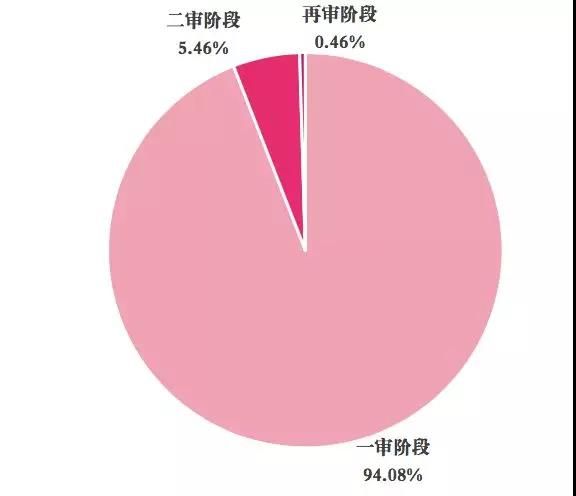
According to statistics, nearly 95 % of divorce cases involving mental damage compensation occur in the first-instance litigation stage. Compared with the first-instance litigation stage, the number of divorce cases involving mental damage compensation in the second-instance litigation stage and the retrial litigation stage is small, accounting for 5.46 % and 0.46 % respectively.
2.Court 's support for compensation for mental damage claims
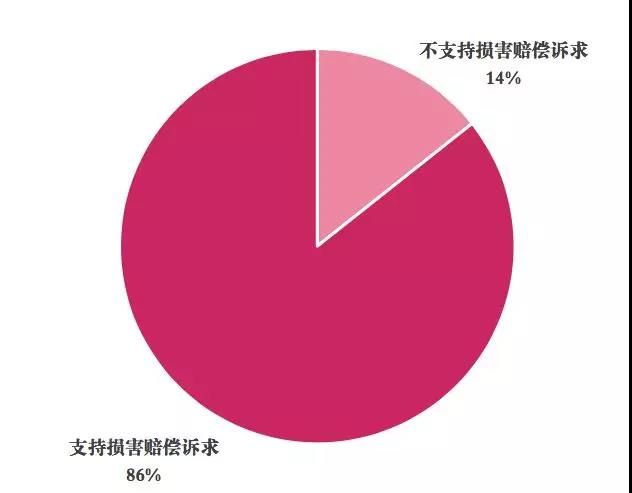
Among the 879 valid judgments, 753 cases were supported by the court, accounting for 86 %, and 126 cases were not supported by the court, accounting for 14 %.
3.The reasons why the court does not support the claim for compensation for mental damage
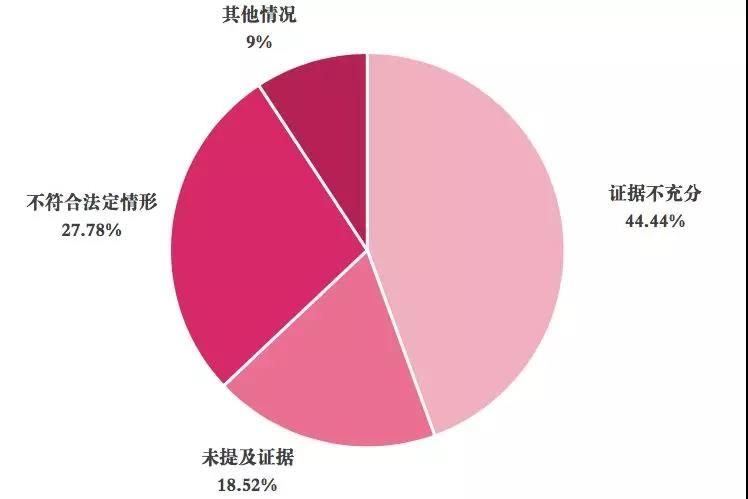
According to statistics, the court 's failure to support the spouse 's claim for mental damage compensation is mainly due to the claimant 's inability to prove ( 18.52 % ) or insufficient proof ( 44.44 % ).
In addition, when one of the spouses can prove that the other spouse has violated the duty of loyalty, because the specific situation of the fault party 's violation of the duty of loyalty does not belong to the two statutory situations of ' bigamy ' or ' cohabiting with others ' stipulated in Article 46 of the ' Marriage Law ' of China, the court did not support the claim of compensation for mental damage to one of the spouses, which accounted for 27.78 % of the cases.
4. Submission of evidence by the party claiming compensation
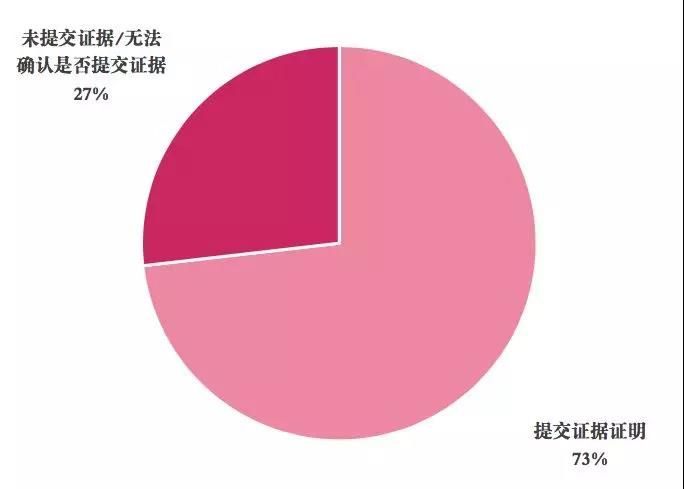
According to statistics, 73 % of the parties have submitted relevant evidence to the court to prove when claiming compensation for mental damage. In addition, 27 % of the parties have not submitted evidence on their claims ( this part of the data includes cases where it is impossible to judge whether the parties have presented evidence to the court ).
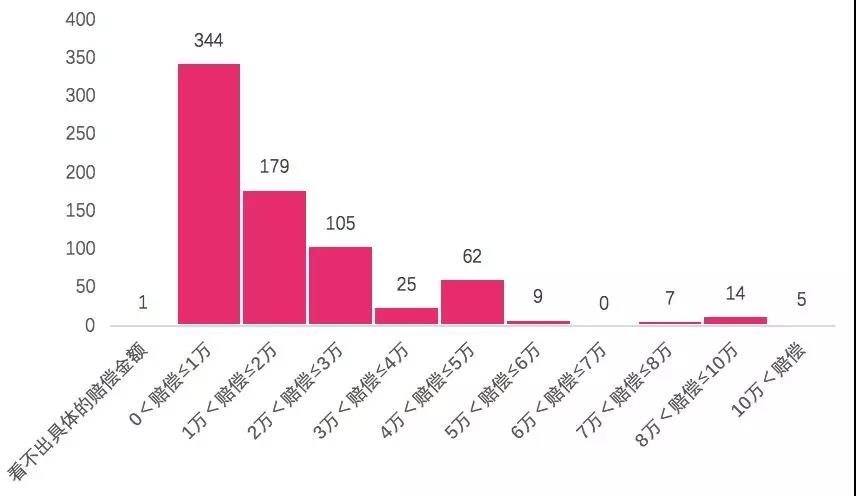
5.Distribution of the amount of compensation for mental damage
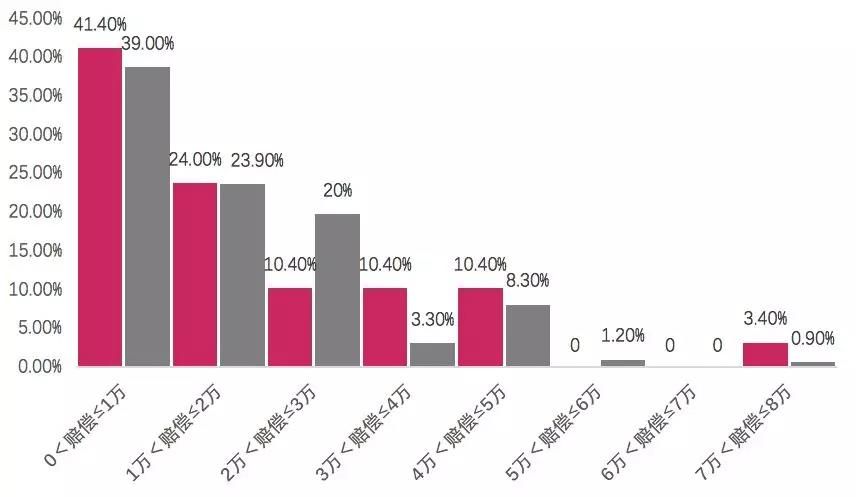
In 879 valid judgments, the amount of compensation for mental damage supported by the courts is mainly under 30,000 yuan. The number of cases with a compensation amount of less than 10,000 yuan was the largest, with 344 cases, accounting for 39 % ; the number of cases with a compensation amount of more than 10,000 yuan and less than 20,000 yuan was the second, with a total of 179 cases, accounting for 20.4 % ; the number of cases with a compensation amount of more than 50,000 yuan is very small, with a total of 35 cases, accounting for 4 %.
6. Degree of Fault of the Unfaithful Party
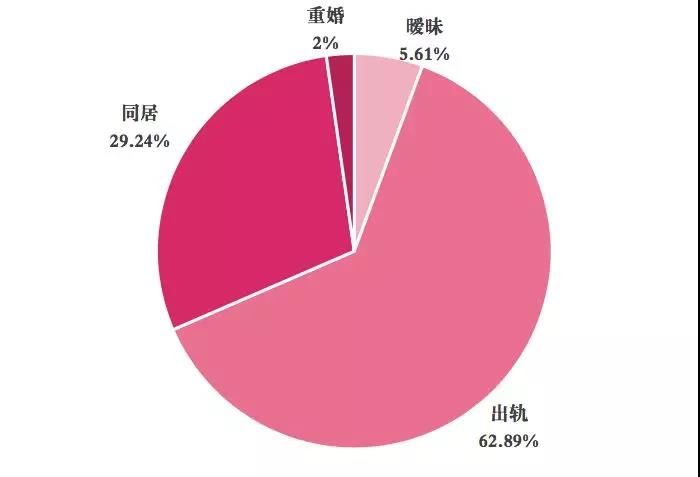
Among the 838 cases that can judge the degree of fault of the unfaithful party, the number of cases of physical infidelity is the largest, with a total of 527 cases, accounting for 62.89 % ; the number of cases in which cohabitation was formed was the second, with a total of 245 cases, accounting for 29.24 %.
7.Relationship between the degree of fault and the court 's support for the claim for compensation for mental damage
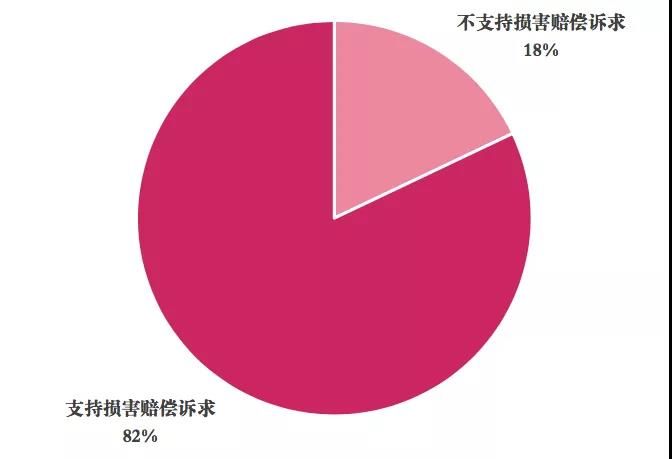
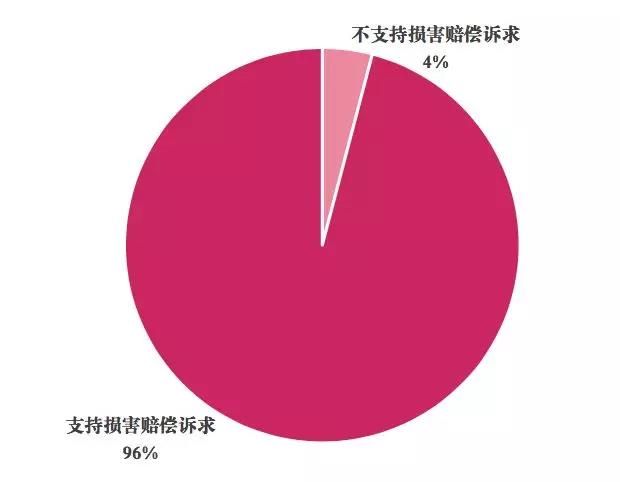
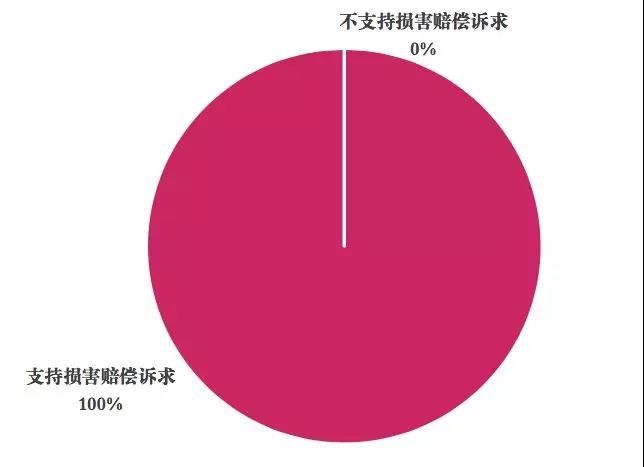
According to statistics, the closer the extramarital relationship between the fault party and the third person is, the higher the likelihood that the court will support the spouse 's claim for mental damage compensation. In the case of the court 's determination of the fault party and the third party 's bigamy, the court 100 % supported the spouse 's request for compensation for mental damage ; in the cases where the court finds that the fault party has a cohabitation relationship with a third person, the proportion of cases in which the court supports the mental damage compensation request of one of the spouses is 96 % ; in the case where the court finds that the fault party has the fact of physical cheating, the proportion of cases in which the court supports the spouse 's request for compensation for mental damage is 82 %.
When the fault party is found to have the fact of physical infidelity
When the fault party is found to be cohabiting with a third person,
When identifying the fault party and the third person 's bigamy
8.Impact of the Fault Party's Admission of Infidelity on the Court's Support for the Spouse's Claim for Mental Distress Damages
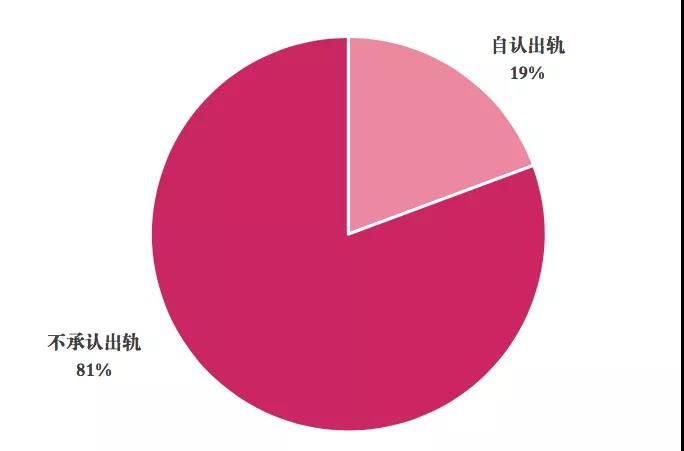
Among the 879 valid judgments, only 170 judgments have the fault party 's admission, accounting for 19 %. In the case of the fault party 's self-recognition, the proportion of cases in which the court supports the spouse 's claim for mental damage compensation is 97.6 %. Only in four cases, the court did not support the spouse 's claim for mental damage compensation because of the fault party 's self-recognition.
9.Whether there are other grounds to support a claim for moral damages
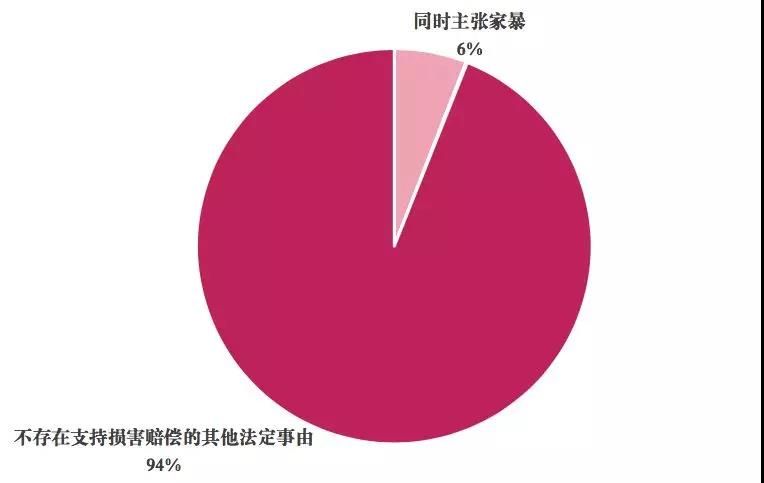
According to statistics, only 6 % of the cases have more than one legal reason to request compensation for mental damage. Among these cases, only one case claims for compensation for mental damage because of extramarital affairs, abandonment and abuse of family members, and the rest of the cases claim for compensation for mental damage because of extramarital affairs and domestic violence.
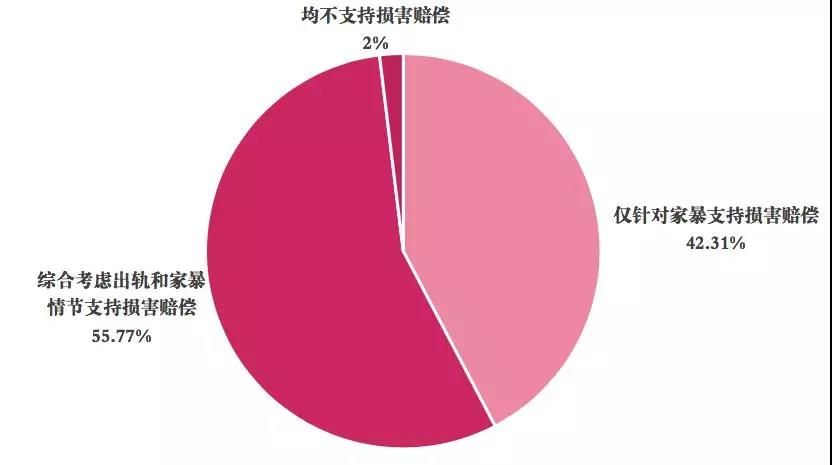
In the case where one party claims that there are both extramarital affairs and domestic violence faults and claims for mental damage compensation, the court only finds the fault of domestic violence, thus supporting the claim for mental damage compensation. The proportion of cases accounted for 42.31 % ; the court comprehensively considered the dual factors of extramarital affairs and domestic violence, thus supporting 55.77 % of the cases for compensation for mental damage. The proportion of cases in which the court does not support the claim for compensation for mental damage is 2 %. The reason is that the spouse cannot fully prove the claim.
In the case where the court supports the request for compensation for mental damage by comprehensively considering the fact that one party has both extramarital affairs and domestic violence, the amount of compensation for mental damage supported by the court has increased slightly.
In the figure below, red is the distribution of the amount of compensation for mental damage awarded by the court in the case of extramarital affairs and domestic violence, and gray is the total distribution of the amount of compensation for mental damage awarded by the court reflected in 879 valid judgments. It can be seen from the comparison that the proportion of the amount of compensation for mental damage supported by the court in the two intervals of 30,000 to 50,000 yuan and 70,000 to 80,000 yuan has been significantly improved in the case of comprehensive consideration of various damages.
Summary and thinking
1.Under the premise of full proof, the court is more likely to support the claim for compensation for mental damage.
In 879 valid judgments, the proportion of cases in which the court supported a spouse 's claim for mental damage compensation due to the other party 's violation of the husband and wife 's duty of loyalty was 86 %. In this part of the case, the author was able to confirm from the judgment document. The proportion of cases in which the party claiming damages submitted evidence to prove his claim was 75 %. In the cases where the court does not support the mental damage compensation claim of one spouse, the proportion of cases that cannot be supported by the court due to the inability or insufficient evidence is as high as 62.96 %. Therefore, it can be seen that whether the court supports the mental damage compensation claim of one spouse is positively related to its evidence.
2.For the divorce cases involving extramarital affairs, the judge 's discretion is well reflected, even if the fault party and the third person do not reach the level of cohabitation or bigamy, the proportion of cases in which the court supports compensation for mental damage has exceeded 85 %.
Article 46 of China 's " Marriage Law " exhaustively enumerates two situations in which the non-faulting party is entitled to damages when the fault party violates the duty of loyalty, that is, one party has bigamy or a spouse cohabits with others. Statistics show that in judicial practice, the discretion of judges is well reflected in the application of this clause by courts. Even if the innocent party cannot claim that the guilty party has two cases of ' bigamy ' or ' cohabitation with a spouse ', the proportion of courts supporting damages claims is more than 85 % when the innocent party can prove that the guilty party has cheated.
3.The court has strict requirements for the determination of ' cohabitation ' and ' bigamy ', and the evidence such as photos and text messages is weak. Even if the marriage has children with a third person, it does not represent a situation that meets the statutory damages.
In the case where the court does not support the claim for compensation for mental damage, most of the parties to the case have submitted ' photos ', ' ambiguous text messages ' and other evidence to prove that the other spouse has strayed. However, the author found from the court 's reasoning that such evidence cannot directly prove that the other spouse has a ' spouse who cohabits with others ' and ' bigamy '. Therefore, the court rejected the claim for compensation for mental damage on the grounds that it did not meet the statutory circumstances.
In addition, there are still some cases in which the other spouse has children with a third person and the claimant can prove the situation. However, because the fact of having children is not necessarily related to whether the other spouse has a ' spouse cohabiting with others ' and ' bigamy ', there are still some courts that reject the claim for mental damage compensation.
4.The amount of compensation for mental damage is mainly less than 30,000 yuan, and it is difficult to obtain court support for claiming sky-high compensation for mental damage
In more than 70 % of the cases, the court ruled that the amount of compensation for mental damage is less than 30,000 yuan. Even if there are complex reasons ( such as domestic violence ) for claiming compensation for mental damage, the amount of compensation for mental damage awarded by the court is still less than 30,000 yuan. In 879 valid cases, only 4 cases ruled that the amount of compensation for mental damage is more than 100,000 yuan.
5.When applying Article 46 of China 's " Marriage Law " to claim compensation for mental damage, the two conditions of " no-fault party can claim " and " both parties ' feelings are broken due to the fault of extramarital affairs " should be strictly met.
Statistics show that when the court judges the compensation for mental damage according to Article 46 of China 's " Marriage Law, " the preconditions for the application of this clause are strictly reviewed. When one of the spouses can prove that the other spouse has the two situations of ' bigamy / cohabitation with others ', the court will not support the party 's claim for damages because one of the spouses also has fault situations such as domestic violence.
In addition, for one spouse to prove that the other spouse has a ' bigamy / spouse cohabiting with others ' situation, but because the situation is not the cause of the break of the feelings of the two parties or the situation occurs in the early stage of the marriage relationship and has been transformed, the court will also decide not to support the spouse 's claim for mental damage compensation.
[ Note ]
The term "extramarital affair" in this report includes four situations that violate the duty of marital fidelity: ambiguous relationships, infidelity, cohabitation with another person by a married individual, and bigamy.
The " damage compensation " referred to in Article 46 of the " Marriage Law " includes mental damage compensation and material damage compensation. This report only studies the content of mental damage compensation involved in the case.