Case Study | Do I Need to Support the Other Party's Illegitimate Child?
— Prevention and Remedy of Property Transfer by Raising Illegitimate Children During Marriage
I. Data Analysis
The cases cited in this article are from the Weike Advanced Case Database. With "illegitimate child", "right to dispose of joint marital property" and "child support" as key search terms, a total of 146 cases were recorded, and 39 valid cases were selected. All data statistics in this article are based on these 39 valid cases.
1. Distribution of Case Causes of Action
Among the 39 dispute cases, 21 are disputes over unjust enrichment, 8 are disputes over gift contracts, 5 are disputes over child support, 3 are disputes over confirming the validity of contracts, 1 is a real right dispute, and 1 is a divorce dispute.
2. Attitudes of Courts in Various Regions Towards Whether Paying Child Support to Illegitimate Children Infringes on the Equal Right to Property in Marriage
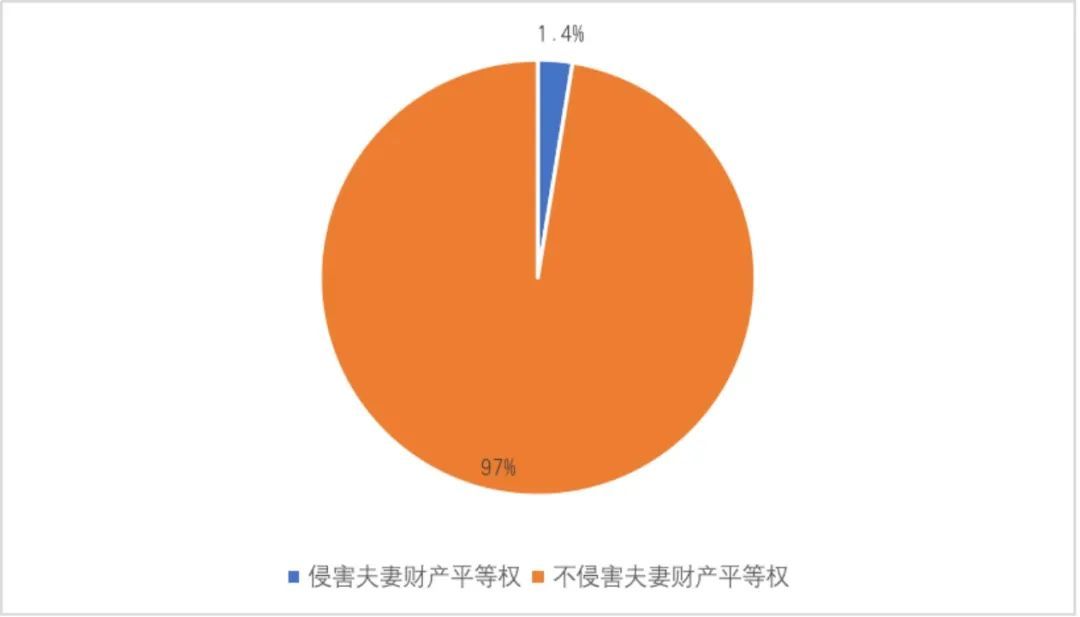
Among the 39 cases, only one case mentioned in its reasoning that the act of gifting property to an illegitimate child violates public order and good morals and is therefore invalid; in all other cases, the court held that paying reasonable child support to an illegitimate child or gifting property to an illegitimate child within one's economic capacity does not infringe upon the equal right to marital property.
3. How Will Courts Handle It If the Defendant (the Mistress) Defends on the Grounds That the Payment Is for Child Support?
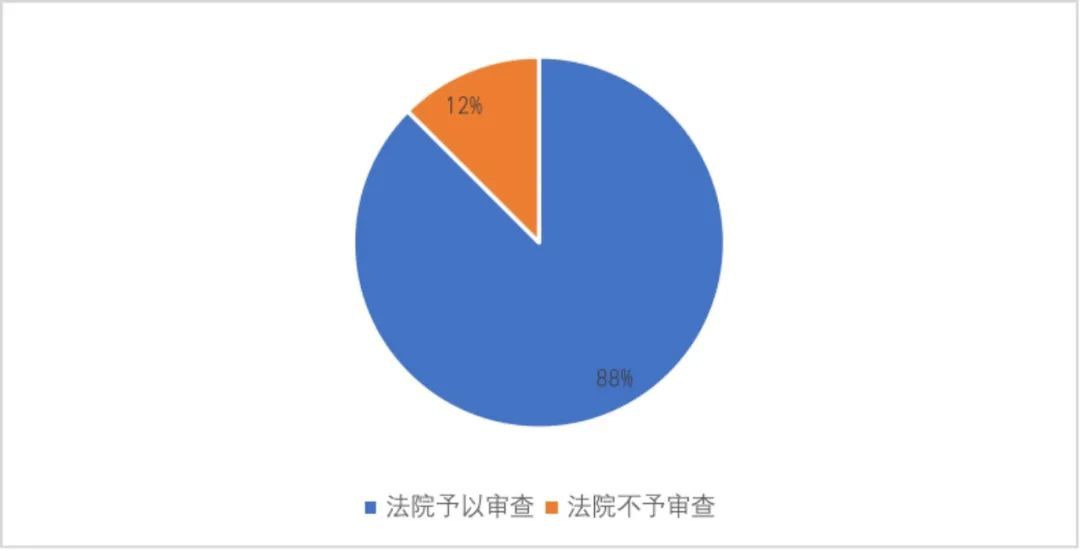
Eighty-seven percent of courts will review whether the donated funds are related to child support and decide whether to deduct them; the remaining thirteen percent of courts will not review the case on the grounds that the defense is not in the same legal relationship as the current case, and inform the parties that they may file a separate lawsuit.
4. Is the reasonable child support paid to an illegitimate child considered a personal debt?
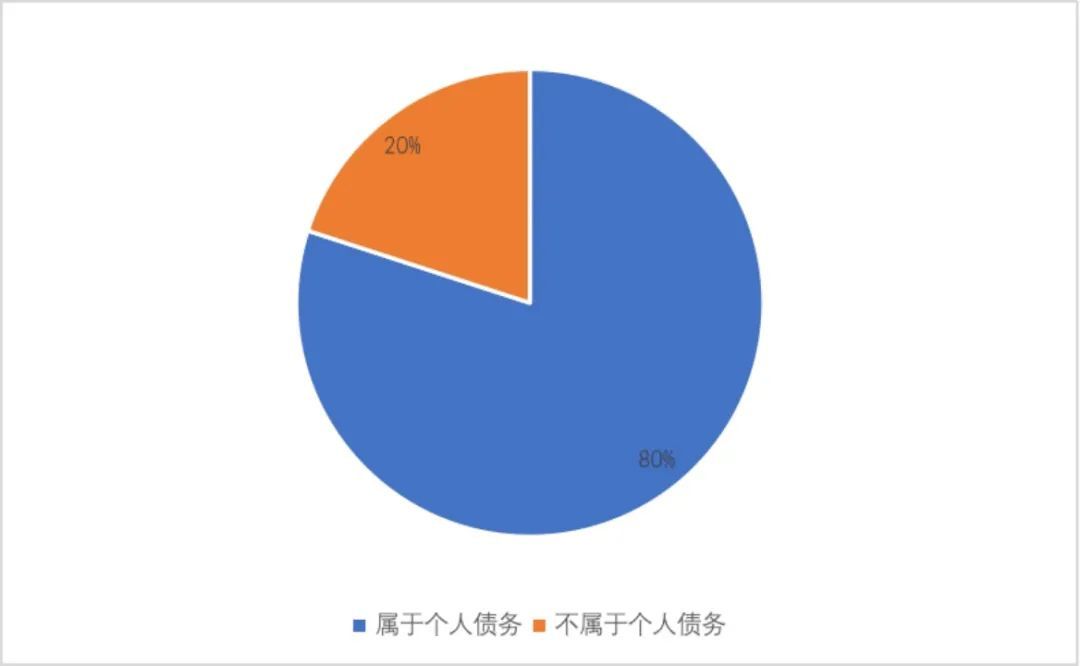
Eighty percent of courts hold that the reasonable child support paid to an illegitimate child can be paid from the joint marital property, while twenty percent of courts hold that the reasonable child support paid to an illegitimate child is a personal debt and cannot be paid with the joint marital property.
II. Recognition and Handling of Such Issues in Judicial Practice
1. During the marriage period, does one party's payment of child support to their illegitimate child infringe upon the other party's marital property rights?
According to legal provisions, on the one hand, parents have the obligation to support their children; on the other hand, husband and wife have equal rights to dispose of their joint property. Therefore, there has always been controversy in judicial practice as to whether one party's act of paying child support to an illegitimate child to fulfill their maintenance obligation during the marital relationship infringes upon the other spouse's property rights, and how to strike a balance between the two.
In 2016, the Supreme People's Court released a publicized case with the case number [(2015) Hu Yi Zhong Min Yi (Min) Che Zhong Zi No. 1], which clarified the handling attitude towards such cases.
Case Brief
During the marriage period, Xu Yi had an illegitimate child Yin Jia with his extramarital lover Yin Mou, and signed a maintenance agreement with Yin Mou without the consent of his spouse Liu Bing. After many twists and turns, the People's Court of Xuhui District, Shanghai, made a judgment ordering Xu Yi to pay 20,000 yuan per month as child support to Yin Jia. After learning of this judgment, Liu Bing filed a third-party revocation lawsuit with the court. It was found that Xu Yi's monthly pre-tax income was 124,000 yuan.
Judgment Results
First-instance Court Judgment
The first-instance court held that since Liu Bing and Xu Yi did not adopt a separate property system during their marriage, both spouses enjoyed equal rights to dispose of their joint property. The court ruled that Xu Yi’s payment of child support to Yin Mou infringed upon Liu Bing’s economic interests, and therefore revoked the judgment of the People’s Court of Xuhui District, Shanghai (Case No. (2014) Xu Shao Min Chu Zi No. 60).
Second-instance Court Judgment
The second-instance court held that although the amount of child support promised by Xu Yi was indeed higher than the general standard, when both parents are financially capable, they should fulfill their obligation to provide better living and learning conditions for their children. The amount of child support promised by Xu Yi was always within the scope of his personal income capacity, and his income has been steadily increasing in recent years. As a result, the proportion of child support paid to Yin Jia in his total income has even decreased. Therefore, there was no act of transferring joint marital property. Thus, the second-instance court held that Xu Yi’s commitment to the amount and duration of child support for Yin Jia did not infringe upon Liu Bing’s rights to the joint marital property.
Supreme People’s Court Ruling Principles
The Supreme People’s Court clearly stated in the [Judgment Guidelines] that although husband and wife have equal rights to dispose of their jointly owned property, each spouse also has the right to reasonably dispose of their personal income. Unless the child support paid by one spouse significantly exceeds their financial capacity or constitutes an act of transferring joint marital property, it cannot be deemed an infringement of the joint marital property rights merely because the spouse failed to reach an agreement with their current spouse.
2. How to Determine the Standard of Child Support?
According to the opinions of the Supreme People's Court, if the standard of child support paid by one party significantly exceeds their economic bearing capacity, or if they attempt to transfer joint marital property by paying child support, such behavior will be deemed by the court as infringing upon the joint property rights of the couple.
Then, how to determine the standard of child support? Article 49 of the Interpretation of the Supreme People's Court on the Application of the Marriage and Family Chapter of the Civil Code of the People's Republic of China stipulates: "The amount of child support may be determined based on the actual needs of the child, the economic capacity of both parents, and the actual living standard of the local area. For those with a fixed income, the child support may generally be paid at a rate of 20% to 30% of their monthly total income. For those who need to support more than two children, the proportion may be appropriately increased, but generally shall not exceed 50% of their monthly total income; for those without a fixed income, the amount of child support may be determined with reference to the above proportion based on their annual total income or the average income of the same industry; in case of special circumstances, the above proportion may be appropriately increased or decreased."
Combined with judicial practice, the determination of the amount of child support mainly considers the following criteria:
(1) The actual expenses of the child at the current age stage;
(2) The economic bearing capacity of both parents and the price level of the area where the child lives;
(3) If the party paying the child support has a fixed income, the standard of child support shall be deemed reasonable if it does not exceed 20% to 30% of their monthly total income.
3. Can the Child Support Paid by One Party to an Illegitimate Child Be Recognized as a Joint Debt?
In this regard, there are two dominant opinions in judicial practice:
(1) A spouse has no obligation to support the other spouse’s illegitimate child, and such debt shall not be recognized as a joint marital debt.
In the case [(2021) Yue 12 Min Zhong No. 1674] heard by the Intermediate People's Court of Zhaoqing City, Guangdong Province, the third party Li Mou frequently transferred money to the defendant Dai Mou without the consent of the plaintiff Lai Mou during the marriage. In response, the plaintiff claimed that the gift contract was invalid and demanded that the defendant return the full amount. After trial, the court found that 106,873 yuan of the transferred amount was the child support paid by the third party Li Mou to his illegitimate son with the defendant. Regarding this part of the money, the defendant claimed that it should be deducted from the total amount on the ground that it was the child support paid by Li Mou. The court held that Lai Mou had no obligation to support Li Mou’s illegitimate child, so the child support that Li Mou should bear for his illegitimate child belonged to his personal debt and should not be deducted from the joint property of Li Mou and Lai Mou.
(2) A spouse has the right to dispose of the joint marital property; if the child support is within a reasonable scope, it may be recognized as a joint debt and deducted from the joint marital property.
In the case [(2021) Yue 01 Min Zhong No. 16122] heard by the Intermediate People's Court of Guangzhou City, the court held that the male party had the obligation to support and educate his illegitimate child and should bear the child support for his son. Therefore, it upheld the first-instance judgment that the child support could be deducted from the amount that the defendant should return.
Based on the results of the aforementioned data investigation, it is not difficult to see that in current judicial practice, more courts tend to support the second view. This undoubtedly causes great distress to the innocent party in the marital relationship: if one spouse has an affair during the marriage and has children with a lover outside the marriage, this already violates public order and good customs and seriously hurts the feelings of the innocent party. If the joint marital property has to be used to bear the child support for his illegitimate child, it can be described as adding insult to injury for the innocent party. Then, how can the innocent party in the marriage achieve self-relief?
III.How Can the Innocent Party in a Marriage Seek Remedy?
1. Due Diligence Before Marriage Is Very Important
It is very necessary to conduct due diligence on the other party before entering into a marriage. To a certain extent, the quality of due diligence determines the quality of our marriage. The investigation covers various aspects, which we will not elaborate on here. This article focuses on the investigation of the future spouse’s past marital and childbearing history.
We often see such plots in film and television dramas: one party in a romantic relationship asks the other how many boyfriends (or girlfriends) they have had before, and some lovers even have conflicts because of this, arguing that this belongs to one party’s personal privacy and the other party has no right or should not dig into it. In fact, this is not the case. In the cases handled by Wumei Lawyers, there have been many instances where, due to insufficient understanding of the spouse’s past romantic history, one party only discovers after marriage that the other party has personality defects such as a violent tendency, or has concealed the fact that they already have children from previous marital (or romantic) relationships and need to bear maintenance responsibilities. All these will undoubtedly cause fatal harm to the marital relationship between the two parties.
Up to now, a citizen’s personal marital status and children’s information are all within the scope of personal privacy. Only the citizen themselves can access this information, and no other person can query it directly. In this regard, Wumei Lawyers believe that the most efficient and reliable channel is through open and honest communication: both parties intending to establish a romantic or marital relationship provide their own supporting documents respectively. At the same time, it is also recommended to communicate more with the other party’s family members, relatives and friends, from which a lot of effective information can be obtained to assist us in making judgments.
2. Avoid the Spouse Transferring Joint Marital Property in the Name of Paying Child Support
According to legal provisions and judicial practice, property directly gifted to an extramarital lover will be required to be returned. Therefore, in some cases, the cheating party will transfer property to an illegitimate child—for example, by buying a house for the illegitimate child or paying money in the name of child support—to avoid legal liability.
In practice, for such behaviors, if it can be verified that the money paid by the cheating party is not used for raising children, or the amount is excessively high beyond the necessary limit, the court will generally support the claim of the original spouse for return.
Examples are as follows:
In the case [(2019) Shan 01 Min Zhong No. 13857] heard by the Intermediate People's Court of Xi'an City, Wang Mou cohabitated with his extramarital lover Guan Mou during his marriage with Chen Mou and had one son and one daughter with her. Wang Mou and Guan Mou signed a "Maintenance Agreement" agreeing to pay a total of 1.5 million yuan to their illegitimate children. After trial, the court found that although the agreement was named a maintenance agreement, its content had nothing to do with paying child support; the involved amount was large, exceeding the daily needs of the couple, and the agreement was signed without Chen Mou's consent, so the agreement was invalid and the involved amount should be fully returned.
In the case [(2017) Yu 1102 Min Chu No. 3567] heard by the People's Court of Yuanhui District, Luohe City, Han Mou, during his marriage with Li Mou, gave a house worth 2 million yuan as a gift to his illegitimate son Dong Mou. The court ruled that the gift act was invalid and the involved house should be returned.
In the case [(2019) Gan 10 Min Zhong No. 1203] heard by the Intermediate People's Court of Fuzhou City, Wang Mou had an illegitimate son with his extramarital lover Cai Mou during his marriage, and signed a "Maintenance Agreement" when they broke up, specifying the amount of child support to be paid to the illegitimate child. The court held that the agreed child support far exceeded the reasonable amount required to raise the illegitimate child, and ruled that the signed "Maintenance Agreement" was invalid.
It is not difficult to see from the above cases that if one spouse intends to transfer joint marital property by signing a "Maintenance Agreement" to agree on a high amount of child support or gifting a house to an illegitimate child, such attempts are often difficult to realize in practice. Therefore, as the original spouse, it is necessary to focus on preventing the other party from manipulating daily child support payments. In this regard, Wumei Lawyers suggest that the original spouse should fully exercise the right to know and equal right to dispose of joint marital property granted by law, and should not be a "hands-off manager" under any circumstances. Specifically, it can be done from the following aspects:
(1) Grasp the registration and change status of important family assets.
Taking Guangzhou as an example: one spouse can query the equity, real estate, vehicles and other property information under the other spouse's name with their own identity documents. In addition[1], on the basis of mastering this information, they should also pay close attention to the changes of the property. Taking Guangzhou as an example again, if one spouse wants to dispose of large-value assets under their own name (such as selling a house), they can conduct transactions at the real estate administrative department without the consent of the other spouse.
(2) Pay full attention to the transaction information of the other party's bank accounts, WeChat, Alipay and other electronic accounts.
In the era of big data, information speaks volumes. In the marriage cases handled by Wumei Lawyers, bank statements and electronic account transaction information often provide a lot of useful clues, and the acquisition of these materials often depends on being a careful person in daily life.
3.Sign an agreement in advance to stipulate that the child support for one party’s illegitimate child shall be regarded as a personal debt.
Once an illegitimate child is born, the obligation to bear the relevant responsibilities is inevitable. To avoid future disputes—especially the situation where the court may recognize the child support paid by the cheating party to their illegitimate child as a joint marital debt—Wumei Lawyers suggest that an agreement can be signed in advance to stipulate that the child support paid by one party to their illegitimate child shall be regarded as their personal debt, and the other party shall not be liable for it.
[1] Article 23 of the Regulations on the Protection of Women's Rights and Interests in Guangzhou stipulates that one spouse may apply to administrative departments such as market supervision and administration, real estate administration, and vehicle administration for inquiring about the other spouse’s property status by presenting valid documents proving the marital relationship, such as ID card, household registration booklet, and marriage certificate. The relevant administrative departments or units shall accept the application and issue corresponding written materials.



