


Big data on extramarital affairs | Does the court support the third party 's defense of ' living together ' ?
Introduction
In the field of marriage and family disputes, disputes over the return of property caused by extramarital affairs have always been a hot and difficult point in judicial practice. In such cases, the derailed party gives the joint property of the husband and wife to a third party outside the marriage without authorization. The original claim that the donation is invalid and the claim for full return should have a clear legal basis. However, whether the third party 's defense of ' the transfer money involved in the case has been used for daily common living consumption such as renting, catering, water and electricity ' can be supported will often become the focus of controversy in the case, and the referee 's results will be greatly variable due to the difference in the degree of proof, fact finding and discretion.
In October 2025, the Guangzhou Intermediate People 's Court of Guangdong Province concluded the ( 2025 ) Guangdong 01 Minzhong No.10774 case of unjust enrichment dispute, which reflected the dispute incisively and vividly : in this case, the defendant Tan argued that the refund should be deducted on the grounds of extramarital communication with the cheating party and the transfer of funds for rent, property fees, daily catering and other common living expenses. The court of first instance held that the evidence submitted by Tan was not enough to prove the common living expenses, and ordered the full return of more than 140,000 yuan. On the basis of the same facts, the court of second instance, combined with the objective situation of extramarital exchanges between the two parties, the local consumption level and the characteristics of small scattered transfers, determined that ' there is a reasonable common consumption expenditure ', and finally changed the sentence to a 20 % reduction as appropriate, and ordered Negotiation to return only 110,000 yuan.
The same case, the same defendant, the same advocate deduction of living expenses, why the court of first instance to ' insufficient evidence ' rejected the defense, ordered the full return of more than 140,000 yuan ; the court of second instance directly changed the judgment, deducting 20 % as appropriate, and only ordered the return of more than 110,000 yuan ? In fact, the divergence of judgments between the two courts essentially reflects the core controversy over the standard of proof and the standard of determination of ' common life defense ' in judicial practice. What is the degree of proof that the court will recognize the defense of common life ? How to determine the standard of deduction ? In order to clarify the above-mentioned judicial adjudication rules, this paper attempts to dismantle the identification logic, key points of proof, influencing factors and practical rights protection strategies of ' common life defense ' from the perspective of data demonstration through case retrieval and analysis, so as to provide a reference for lawyers to represent relevant cases.
Part I Data Analysis
Based on the Alpha database, this paper retrieves 231 cases involving extramarital affairs in the past five years ( 2021-2026 ) with the keywords of ' improper relationship between men and women, common life / cohabitation, daily consumption ', as judgments on gift disputes and unjust enrichment disputes, and conducts follow-up research based on this.
The ' common life defense ' studied in this paper refers specifically to the third party 's claim that the money transferred by the derailing party has been used for daily common life consumption such as renting, water and electricity, catering and so on, rather than personal consumption or other legal relations in the dispute over the return of property in extramarital affairs, and the court is requested to find that this part of the money does not need to be returned.
1.The court holds a strict review attitude towards the common life defense proposed by the third party, and supports the ' very high threshold ' of the defense.
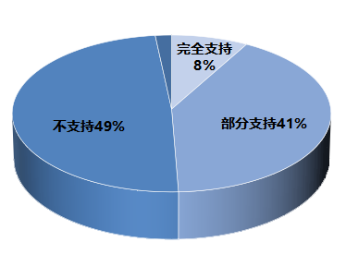
Judging from the overall judgment results of 231 judgments, only 8 % of the cases in the court fully supported the defense, 49 % of the cases were completely dismissed, 41 % of the cases were partially supported, and 2 % of the cases in the court did not based on the third party defense, but actively exercised its discretion to adjust the return payment. This data clearly shows that the court neither completely denies the objective possibility of co-consumption during extramarital affairs, nor easily endorses the third party 's defense claim.
2.The third party mainly raises the defense on the basis of daily catering consumption.
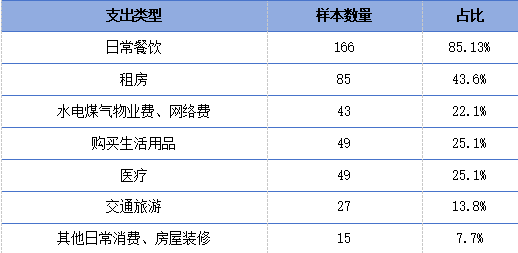
From the perspective of the type of common living expenditure advocated by the third party, daily catering is the most important type of claim, accounting for 85.13 %. It can be seen that such consumption is the most common form of expenditure during extramarital affairs ; followed by rental expenditure, accounting for 43.6 %. On the whole, the third party 's defense claims revolve around the necessary expenses of daily life, which also reflects its attempt to weaken the gift nature of the payment through the attribute of " necessary consumption. "
3.Analysis of the reasons why the court does not adopt the " co-living defense "
( 1 ) Core reason : insufficient evidence
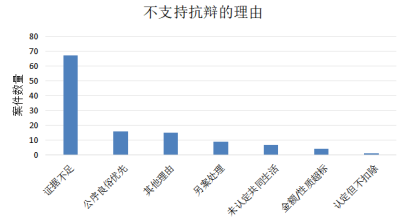
In the cases where the court does not support the defense of common life, the proportion of different reasons shows obvious gradient characteristics. Among them, insufficient evidence is the core reason for losing the lawsuit, accounting for 54 %, followed by the application of the principle of priority of public order and good customs, accounting for 14.2 %. This data fully shows that the court 's review of the common life defense first examines whether the evidence is sufficient and whether a complete and effective evidence chain can be formed. In addition, some courts have taken a hard-line judgment position, arguing that extramarital affairs themselves violate public order and good customs and damage the legitimate rights and interests of spouses. Even if there is co-living consumption, it does not change the invalid nature of the gift behavior, and will still order full return.
( 2 ) The deep analysis of ' insufficient evidence '
In judicial practice, in order to support the defense of common life, the third party will provide evidence around the four core dimensions of relationship nature, common residence, common consumption and special matters, which can be divided into four categories :
A) To prove that there is an intimate relationship between the two parties : chat record screenshots, SMS screenshots, life photos / videos, social platform content, call recordings ;
B) Proof of the existence of cohabitation or stable co-residence facts : rental contract, rent / utilities / property fee payment certificate, property / landlord / neighbor 's written proof, online shopping / takeaway with the address record, common life agreement ;
C) Certified funds are used for daily common consumption of both parties : WeChat / Alipay / bank transfer details, family card consumption records, takeaway / online shopping orders, supermarket tickets, transportation / tourism / accommodation vouchers, self-made expenditure summary tables ;
d.Certify common expenses or compensatory expenses in special scenarios : medical / surgical / production inspection vouchers, break-up / compensation agreements, police station mediation / alarm records, vehicle-related payment vouchers.
The author finds that the third party 's relevant evidence claim is often difficult to obtain the support of the court. The core reason is that the court has strict requirements on the relevance of the evidence, and requires multiple evidence to support each other to form a complete chain. In judicial practice, the situation of ' insufficient evidence ' is mainly reflected in four types :
A) Lack of objective evidence of co-residence
The court 's determination of the fact of common life is primarily based on the existence of cohabitation or stable co-residence between the two parties, and the proof of this fact requires objective evidence such as rental contract, landlord 's testimony, hydropower and gas payment record, and property company proof. Only oral statements, WeChat chat records or single witness testimony cannot form an effective chain of evidence, and it is difficult for the court to determine the fact of common residence.
B) There is a lack of correlation between consumption records and cheating parties
Although some third parties have submitted consumption records, the records cannot prove that they are related to the cheating party. For example, the rental contract is signed unilaterally by the third party, the take-out order is single person, and the daily necessities purchased are exclusive to women. Such evidence can only prove the personal consumption of the third party and cannot be identified as the common consumption of both parties, and the court does not recognize its relevance.
C) Only transfer records, no corresponding consumer payment vouchers
The third party only submits the expression of ' money for common life ' in the chat record and the transfer record of the derailed party, but does not submit the corresponding consumption payment vouchers for rent, catering, water and electricity, etc., and cannot prove the actual use of the money. It is difficult for the court to determine the causal relationship between the transfer and the consumption of common life.
D) Lack of probative force of witness testimony
The third party applies for relatives and friends to testify in court to prove that there are facts of common life and consumption between the two parties. However, because the witness has an interest relationship with the third party and there is no other evidence to support it, the probative force of his testimony is weak, and the court generally does not accept it.
Corresponding to the situation of insufficient evidence, in the cases where the court supports the common life defense, the third party is required to submit a complete and mutually corroborated evidence chain, rather than a single evidence. In practice, the evidence chain adopted by the court mainly includes three types of core evidence :
A) evidence of co-housing : such as the rental contract signed by both parties, the long-term water and electricity payment record of the same address, the co-housing certificate issued by the property company, etc. ;
B) Evidence to prove common consumption : such as common takeaway orders, online shopping records including male goods, tourist consumption vouchers such as scenic spot tickets and air tickets, and medical bills ;
C) Evidence to prove the use of funds : such as the derailed party transfer note 'rent ', ' living expenses ', the third party to pay the rent to the landlord within a short period of time after receiving the transfer certificate, etc.
The above types of evidence confirm each other to form a complete chain of evidence, so that the judge can form an inner conviction and recognize the fact of common life consumption.
4. The influencing factors of ' common life defense ' being supported
The court 's determination of the defense of common life is not based on a single standard, but on the comprehensive judgment of multiple facts of the case. From the empirical analysis of 231 judgments, whether there is a clear common life fact, the subjective attitude of the third party, the characteristics of the transfer behavior, the recognition of the derailed party, the regional difference and the judge 's discretion are the six key factors affecting the court 's judgment tendency.
( 1 ) Whether the fact of living together is determined
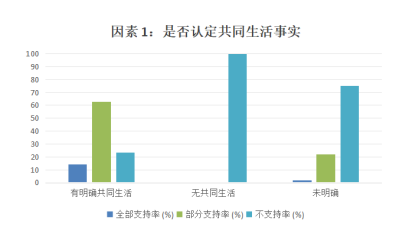
Among the cases with clear facts of living together, 14.2 % were fully supported, 62.5 % were partially supported, and the overall support rate of the defense was 76.7 %. In the case of no common life facts, the defense is 100 % rejected ; in the cases where the fact of living together was not clear, 75.2 % were rejected and only 21.9 % were partially supported. This data clearly shows that the clear fact of living together is the basis for the establishment of the defense of living together.
( 2 ) Subjective attitude of the third party
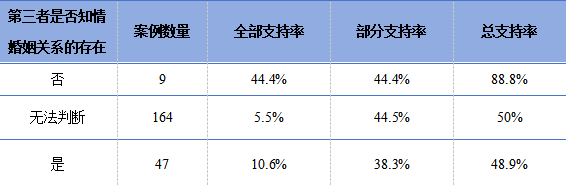
Whether the third party is aware of the fact that the cheating party is married will directly affect the support rate of the defense.44.4 % of the uninformed cases are fully supported and 44.4 % are partially supported, with a total support rate of 88.8 %. In the informed cases, only 10.6 % were fully supported, 38.3 % were partially supported, and more than half were rejected.
In 11 other cases, the court held that whether the third party was aware of the existence of the marriage relationship did not affect the legal consequences of the gift behavior being invalid due to the violation of public order and good customs. In this case, the total support rate was 36.4 % ( including all support and partial support ).
Overall, regardless of whether the court considers the subjective state of knowledge, it will not change the determination of the invalidity of the gift behavior in extramarital affairs. The court only deducts reasonable co-living consumption when calculating the refundable amount, rather than exempting the third party from the refund obligation.
( 3 ) Transfer characteristics
The court will judge whether the money is used for common living consumption according to the characteristics of the amount and frequency of the transfer, whether there is a transfer note, and whether there is mutual exchange. Among the 231 judgments, 12 cases ( 5.2 % ) directly affected the judgment results due to the clear transfer characteristics. In practice, small, scattered and frequent transfers are more likely to be identified as daily common life consumption ; large, integer, special festivals ( such as Valentine 's Day, Tanabata ) special amount of money transfer, because obviously beyond the needs of daily life, is usually identified as a gift ; if there is a transfer between the two parties, the court generally supports the deduction, and the defense is more likely to be supported ; the transfer notes have specific consumption purposes such as 'rent ', ' water and electricity ', ' living expenses ', etc., which is convenient for the court to directly determine that the money is used for common life.
( 4 ) Whether the unfaithful party recognizes it
The self-admission of the unfaithful party to the common life and consumption facts is also an important factor for the court to determine the facts of the case. After combing, a total of 9 cases ( 3.9 % ) of the judgment documents clearly take the self-admission of the derailed party as an important basis for evidence review and fact determination. In the case where both parties state the truth and no collusion damages the original rights and interests, the court usually conducts a comprehensive review in combination with other evidence in the case, carefully adopts the relevant statements, and supports the common life defense claim as appropriate.
( 5 ) Regional differences
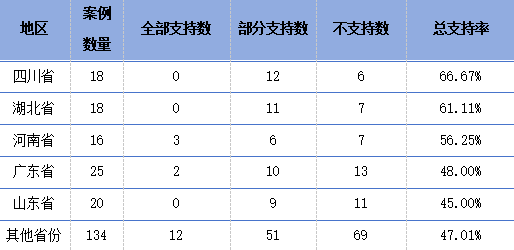
There are some differences in the support rate of the courts in different provinces for the defense of common life. In order to ensure the reference of the statistical results, this analysis only lists the provinces with large sample size separately, and the provinces with less than 15 samples are uniformly classified into the ' other provinces ' combined statistics. The results of data analysis show that the overall support rate of Sichuan Province and Hubei Province is higher, which is 66.67 % and 61.11 % respectively. The support rate of Henan Province, Guangdong Province, Shandong Province and other provinces is relatively low, between 45 % and 56 %. This difference stems from the concept of judicial adjudication in different regions. Some regions pay more attention to respecting objective facts, while some regions emphasize the maintenance of public order and good customs, but there is no fundamental difference in the overall judgment scale.
( 6 ) Judges ' discretion
In 4 cases ( 2.0 % ) of the 231 judgments, even if the third party did not raise a defense of common life, or did not submit sufficient evidence to prove the fact of common life, the judge would deduct the refund based on the discretion and the facts of the case. In this part of the case, the court will take into account that the cost of living together during extramarital affairs is an objective reality. If the third party is ordered to return the full amount, the cost of consumption of the derailed party will be borne by the third party alone, contrary to the principle of fairness ; in the cases where the third party clearly puts forward the defense of common life, there are also 65 cases ( 28.0 % ) reflecting the discretion of the judge. The judge will combine the degree of fault of the derailed party. If the derailed party has obvious faults ( such as concealing the facts of the marriage and actively pursuing the third party ), the court will be more inclined to deduct them as appropriate to avoid encouraging the derailed party to donate property at will, develop extramarital affairs and do not bear any economic losses.
5. Partly support the ' common life defense ' when the referee way
In 41 % of the cases partially supporting the co-living defense, the court did not simply decide to return the money, but formed a relatively fixed deduction method. The whole can be divided into two core logics : direct exclusion and total deduction. Direct exclusion refers to the court 's determination that some of the money is used for co-living consumption and is not a gift, and directly excludes that part of the money from the total amount that should be returned ; total deduction means that the court first finds out the total amount of money transferred to a third party, then deducts the corresponding amount of common living consumption from the total amount, and orders the remaining part to be returned.
Combined with judicial practice, the specific deduction operation can be divided into three ways :
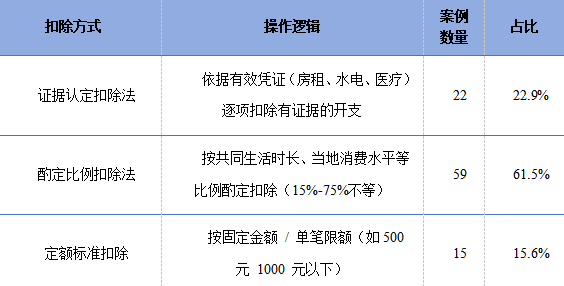
A) Evidence determination deduction method : applicable to the case where a third party has submitted sufficient and specific consumption vouchers, the court will examine the valid evidence such as rental contracts, water and electricity payment vouchers, medical bills and other items one by one, and deduct the co-living expenses supported by evidence directly from the total amount due to be returned. This method has the most accurate results, but it has the highest requirement for the third party 's ability to prove, accounting for 22.9 % of some support cases.
B) Appropriate proportion deduction method : applicable to the situation where the facts of common life are clear but the specific consumption amount cannot be accurately calculated by evidence, the court exercises its discretion to deduct from the total amount due by a certain proportion ( ranging from 15 % to 75 % ) in combination with the duration of the improper relationship, the intimacy of the two parties, the experience of daily life, the fault liability and the evidence of the whole case. This method is simple to operate and takes into account the principles of judicial efficiency and fairness. It accounts for 61.5 % of some support cases and is the most mainstream deduction method.
C) Quota standard deduction method : it is applicable to the situation that there are a large number of small and scattered transfers to the third party in the direction of derailment, the court will set a fixed amount standard ( such as 500 yuan, 1000 yuan, 2000 yuan ), and determine that the transfer below the standard is presumed to be common living consumption, which will not be returned, and only the transfer beyond the standard will be returned. The rules of this method are clear and easy for the court to quickly identify, accounting for 15.6 % in some support cases.
Part II Summary of Case Handling Ideas
Based on the empirical analysis of 231 judgments and the rules of judicial adjudication, the core points of practical rights protection and defense are sorted out respectively for the original spouse ( prosecution ) and the bona fide third party ( defendant ) in the dispute of extramarital love gift, so as to help both parties accurately grasp the key of evidence collection and litigation strategy in the dispute.
1. With respect to the original party ( the prosecution )
A) Priority to fix the core evidence : the transfer record of the unfaithful party, the chat record of the third party and the unfaithful party, the life photo / video, the opening record, etc., prove the improper relationship between the derailed party and the third party and the third party is the subjective malice of knowing that the derailed party is still living with him during the marriage.
B) Actively refute the third party 's defense and question the relevance and integrity of the evidence : In response to the third party 's defense of common life, the original allocation should focus on the evidence level, such as pointing out that the third party 's rental contract is unilaterally signed, the consumption record is not related to the derailed party, only the transfer record is not the consumption certificate, etc., while emphasizing that extramarital affairs violate public order and good customs, even if there is a small amount of common consumption, the third party 's obligation to return should not be waived.
C) Focus on the recovery of large, special nature of the transfer, rational treatment of small transfer : small, scattered, frequent transfer because it is easy to be identified as a common life consumption, the recovery is difficult, the original can give priority to focus on large, integer, special holidays special amount of transfer, and the derailed party for the third party to buy real estate, vehicles, jewelry and other valuables, such payments are more likely to be recognized as gifts by the court, the success rate of recovery is higher.
2. For a bona fide third party ( the defendant ) :
A) To fully retain the evidence of common life and form an effective evidence chain : if there is a fact of common life, the rental contract signed by both parties, the certificate of payment of water, electricity, gas and property fees, the common take-out order, the record of online shopping, the certificate of tourism consumption, the bill of medical expenses, etc., should be properly retained. At the same time, the certificate of the transfer of the derailed party with a specific consumption purpose and the certificate of payment of the corresponding consumption after receiving the transfer should be retained to ensure that all kinds of evidence confirm each other.
B) Promptly claim transfer deduction and reduce the amount of return : if there is a transfer between the derailed party and the derailed party, the transfer record of the derailed party should be fully collected and the deduction should be claimed to the court. This is the most direct ' impairment ' method, which is generally supported by the court.
C) Highlighting the subjective good faith, and strive for the court 's discretion to reduce : if you do not know the fact that they are married when you are dealing with the derailed party, you should submit relevant evidence to the court ( for example, immediately cut off from the derailed party after learning that you are ' little three ' ) to prove your own subjective good faith, even if the gift is invalid, the court will reduce the amount of consumption for common life based on good faith. If it is impossible to submit sufficient evidence to prove the specific amount of consumption, it can focus on the court 's claim for discretionary deduction based on the fact of common life, combined with the local consumption level, the time of common life of both parties and other factors, and strive for the most favorable judgment results.
[ Conclusion ]
In the dispute over the return of extramarital property, the court 's determination of the " common life " defense is essentially a balance between the maintenance of public order and good customs and the respect for objective facts, as well as a balance between punishing fault behavior and adhering to the principle of fairness. On the one hand, the court has always made it clear that extramarital affairs violate public order and good customs. The gift behavior of the derailed party to dispose of the joint property of the husband and wife without authorization is invalid, and the third party should bear the obligation to return, which is the maintenance of marriage and family stability. The inevitable requirement of promoting social good customs ; on the other hand, the court will not ignore the objective fact that there is a common life consumption during the extramarital affair. If the full return is ordered, it will lead to unfair judgment results and even encourage the fault behavior of the cheating party.
From the big data analysis of 231 judgments, there is a clear and unified judgment logic behind the seemingly ' different judgments in the same case ' : evidence is the core, facts are the basis, and public order and good customs are the bottom line. Whether it is the original rights protection or the defense of the third party, it ultimately needs to be supported by evidence to restore the objective facts of the case to the court.