


Foreword
It has been two years since the implementation of China’s Anti-Domestic Violence Law. To better understand the implementation of this law, particularly the application of the personal safety protection order system by courts across the country, Attorney Li Xiaofei, Chair of the Marriage and Family Law Committee of the Guangzhou Lawyers Association, led her team in analyzing relevant data on personal safety protection rulings nationwide since the law’s implementation (as of February 2018) and compiled this report.
This report is structured into three sections: an analysis of the basic situation, judicial practices regarding cases involving applications for personal safety protection orders, and concluding reflections. It systematically analyzes the current state of judicial practices under China’s personal safety protection order system, with the aim of fostering joint attention and advancing the progress of anti-domestic violence judicial practices among industry peers and all sectors of society.
Part I: Analysis of Basic Conditions
Data Sources:
The cases in this report are sourced from the Jufa Case Database. A total of 813 personal safety protection orders (civil protection orders) in China from March 2016 to February 2018 were selected. After screening, some cases involving changes in civil protection orders and those with multiple applicants or respondents were excluded, resulting in 692 valid cases. The statistical data in this report is based on these 692 cases.
I.Significant Disparities in the Number of Personal Safety Protection Applications Handled by Courts Across Regions
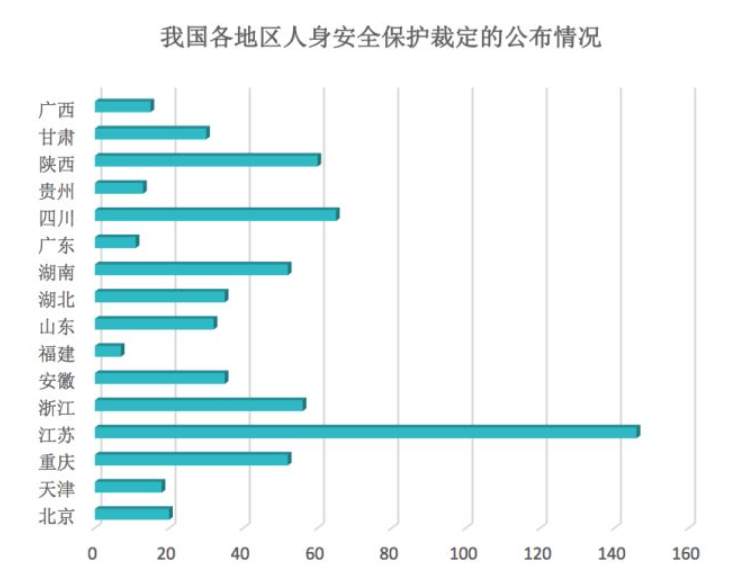
According to published data, courts in Jiangsu Province handled the highest number of personal safety protection applications nationwide, followed by courts in Sichuan and Shaanxi Provinces. In addition, courts in nine provinces, municipalities, and autonomous regions—including Hebei, Shanxi, Liaoning, Jilin, Henan, Yunnan, Qinghai, the Tibet Autonomous Region, and the Ningxia Hui Autonomous Region—handled fewer than 10 personal safety protection order cases each.
II.The number of applicants for personal safety protection orders nationwide increased slightly in 2017 compared to 2016, but the rise was not significant
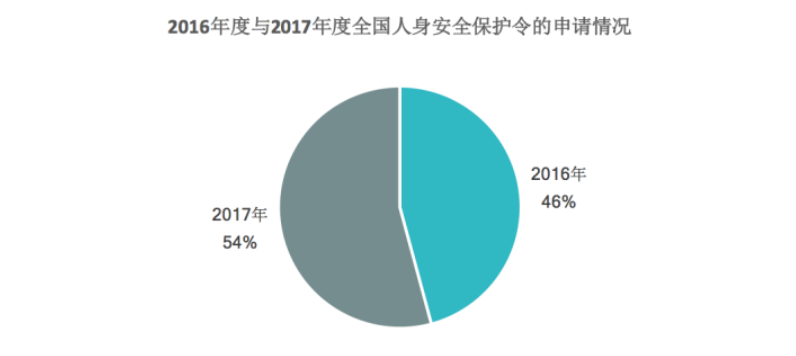
In 2016, the number of personal safety protection order applications nationwide was 317, accounting for 46% of the total; in 2017, the number of applications increased by 58 compared to 2016, reaching 375, accounting for 54% of the total, representing a year-on-year increase of 18% compared to 2016.
III. Gender Distribution of Parties
(1) Are men more likely than women to resort to violence? 93% of applicants were women.
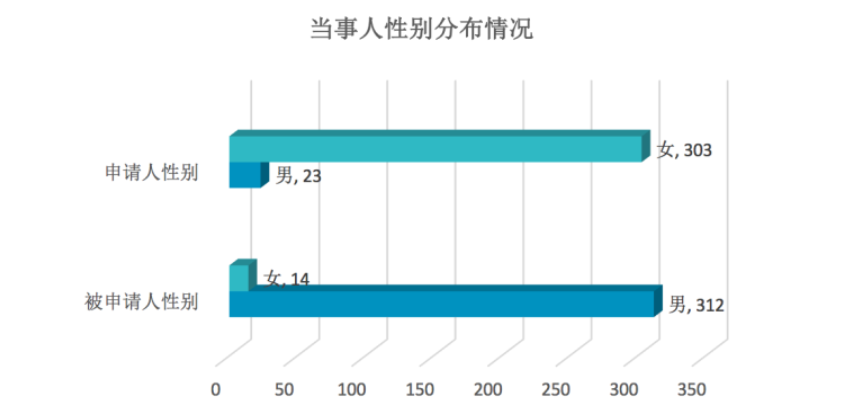
Among the 692 cases, the gender of the applicant and the respondent was recorded in 326 cases. Applicants were predominantly women, accounting for 93%; respondents were predominantly men, accounting for 96%.
(2) 95% of domestic violence cases occur between opposite-sex partners, and the majority involve husbands assaulting their wives.
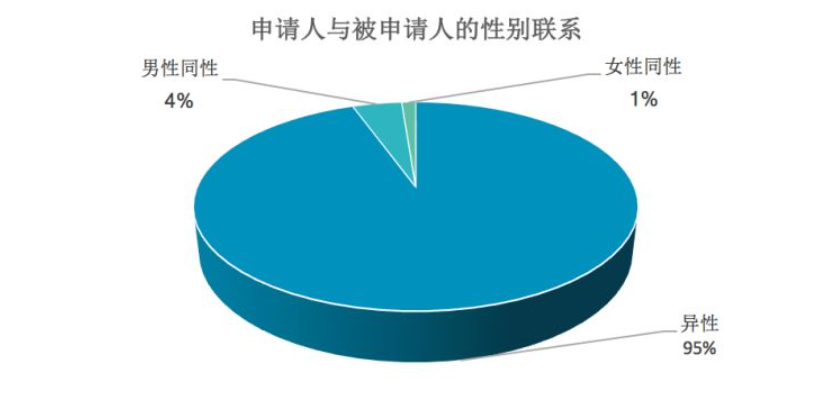
The gender relationship between the applicant and the respondent was predominantly heterosexual, accounting for 95%; whereas personal safety protection applications involving same-sex relationships accounted for only 5%.
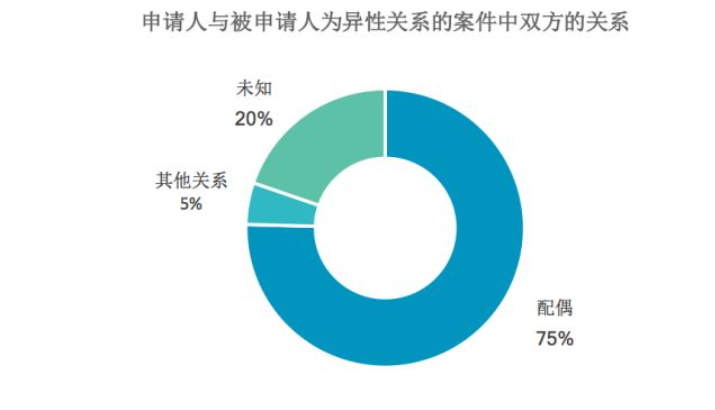
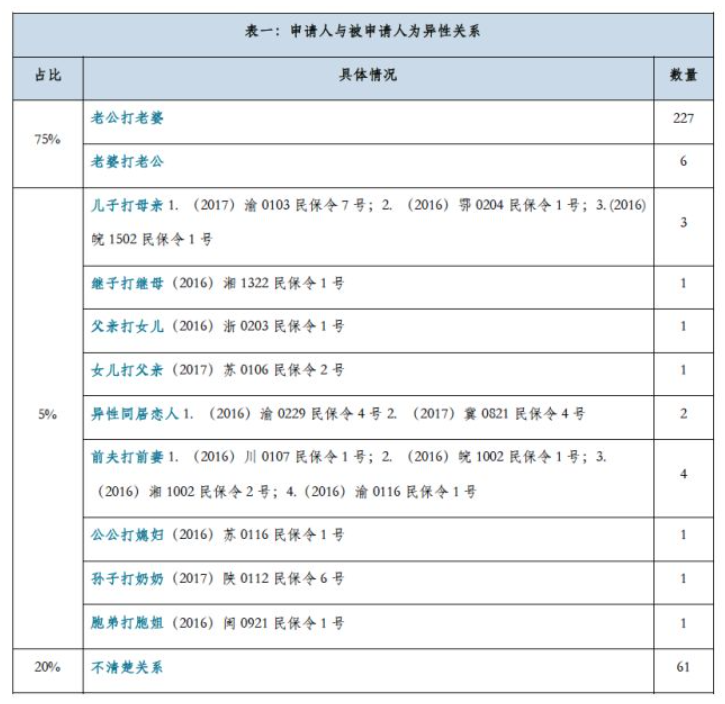
Among cases where the applicant and respondent were of opposite sexes, there were 299 cases where the applicant was female and the respondent was male, and 10 cases where the applicant was male and the respondent was female. The relationship between the parties was primarily that of spouses, accounting for 75% (see Table 1).
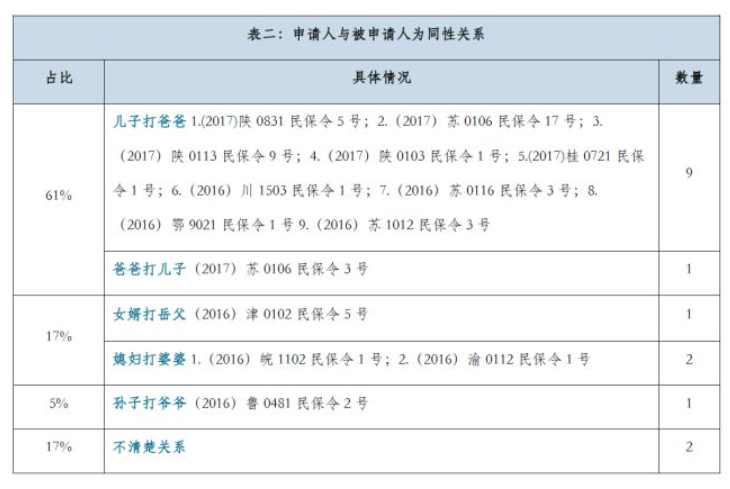
(2) In cases where the applicant and respondent are of the same sex, the relationship between the parties is mostly that of parent and child or other kinship ties.
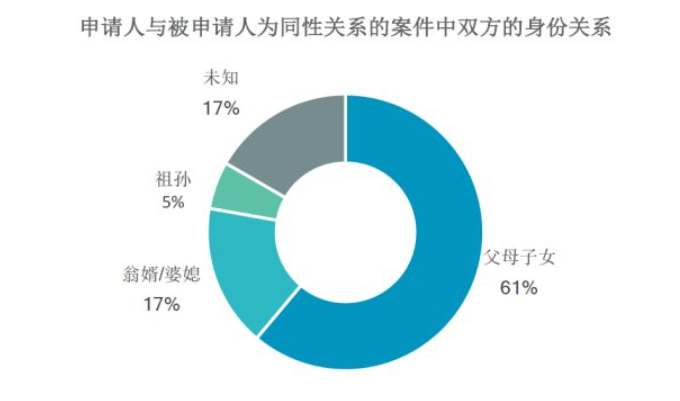
In cases where the applicant and respondent are of the same sex, there were 4 cases where both parties were female and 14 cases where both parties were male. (See Table 2)
IV.Victims: Predominantly Post-1980s, Perpetrators: Predominantly Post-1970s
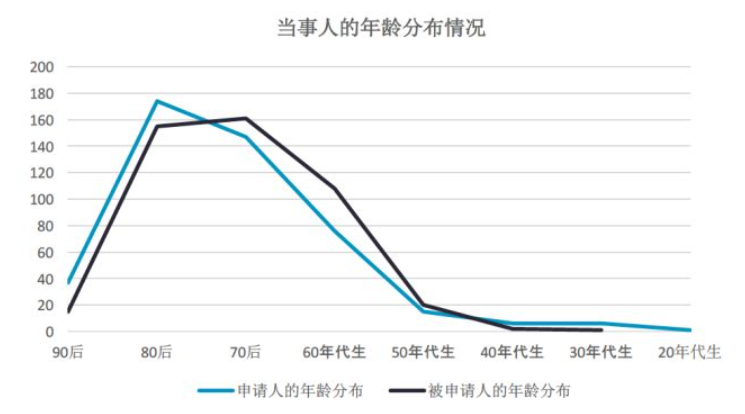
Among the 692 cases, the ages of both the applicant and the respondent were recorded in 462 cases. The majority of applicants and respondents were born in the 1970s and 1980s, with the highest proportion of applicants born in the 1980s and the highest proportion of respondents born in the 1970s.
V. Types of Domestic Violence Involved in the Cases
(1) Nearly all victims had suffered physical violence.
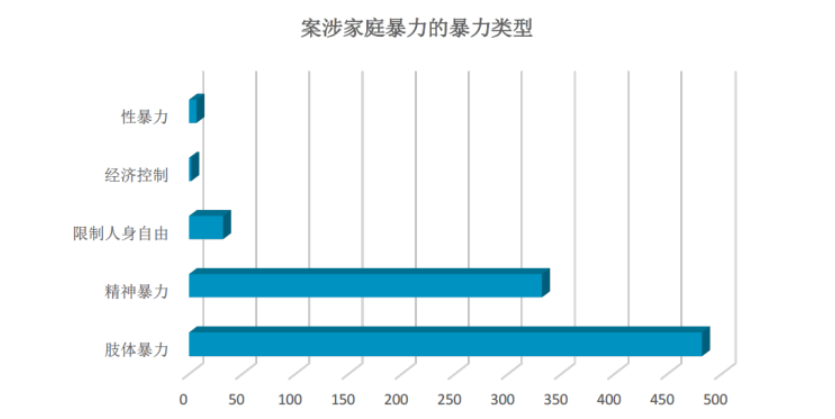
Among the 692 cases, those in which the petitioner alleged physical violence accounted for the largest proportion, totaling 482 cases. In addition, cases in which applicants reported suffering psychological violence ranked second, totaling 332 cases. There were 32 cases in which applicants reported restrictions on personal freedom, and 7 cases in which they reported sexual violence. Cases in which applicants reported economic control were the least common, with only 2 cases.
(2) All other types of violence occurred concurrently with physical violence to varying degrees; in particular, sexual violence and economic control were accompanied by physical violence in 100% of cases.
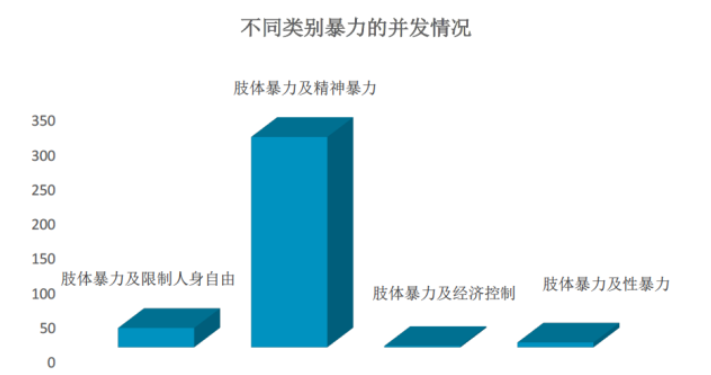
In cases where the applicant clearly specified the type of violence suffered, all applicants alleged that they had suffered physical violence, while there were zero cases in which the applicant alleged suffering from other types of violence alone. The highest number of cases involved applicants alleging simultaneous exposure to psychological violence and physical violence, totaling 304 cases, accounting for 63% of all cases in which applicants alleged that the respondent had inflicted physical violence upon them. Additionally, there were 28 cases in which applicants alleged they suffered both restrictions on personal freedom and physical violence, accounting for 88% of all cases where applicants alleged that respondents restricted their personal freedom. Cases in which applicants alleged they suffered both sexual violence and physical violence, as well as cases in which applicants alleged they suffered both economic control and physical violence, each accounted for 100% of the cases where applicants alleged that respondents subjected them to sexual violence and economic control, respectively.
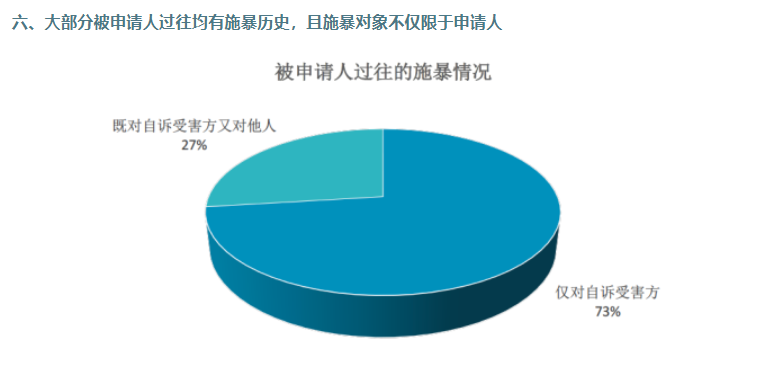
VI. Most Respondents Have a History of Violence, and Their Victims Are Not Limited to the Applicants
Among the 692 cases, applicants in 482 cases (70%) alleged that the respondents had a history of domestic violence. Of these, 73% of applicants alleged that the respondents had only committed violence against them personally, while 27% alleged that the respondents had committed violence not only against them but also against others.
Part II: Judicial Practice in Cases Involving Applications for Personal Safety Protection Orders
I. In terms of trial organization, personal safety protection order cases are primarily heard by a single judge
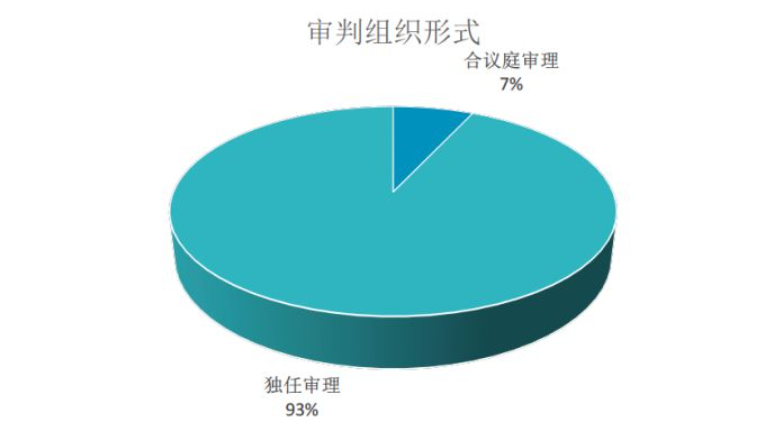
In the 692 cases, 644 were adjudicated by a single judge, accounting for 93%; the remaining 48 cases were adjudicated by a collegiate bench, accounting for 7%.
II. The court’s approval rate for protection orders reached 72%
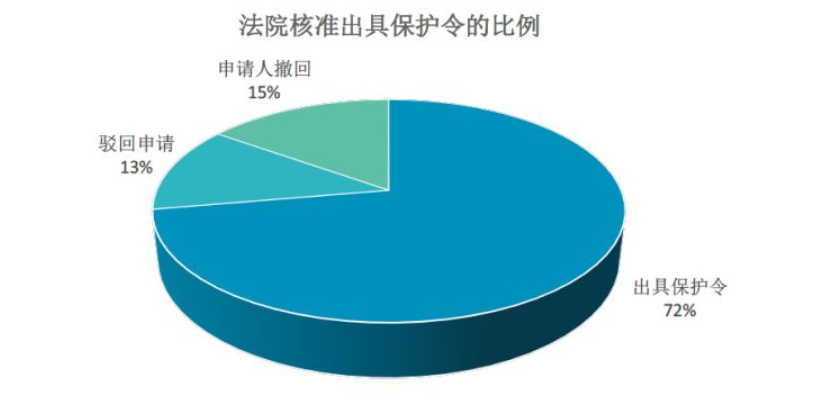
Of the 692 cases, the court issued personal safety protection rulings in 500 cases, accounting for 72%; dismissed applications in 87 cases, accounting for 13%; and saw applicants withdraw their applications in 105 cases, accounting for 15%.
III. How fast do courts approve protection orders? The largest number of cases involved rulings issued within 24 hours, but there were also many cases where rulings were issued after the statutory deadline
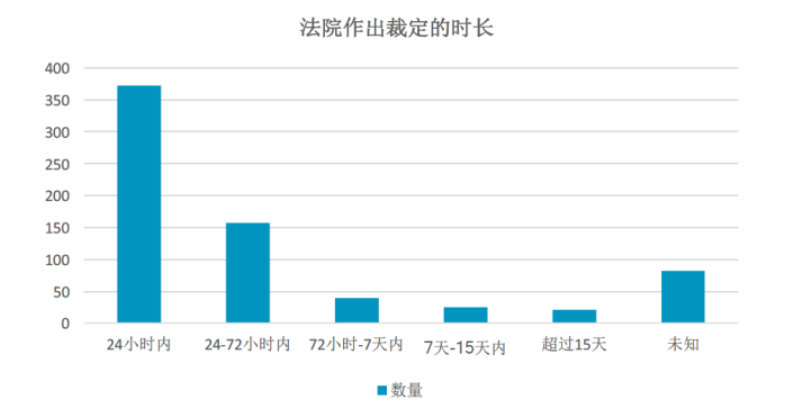
Among the 692 cases, 372 rulings (54%) were issued within 24 hours; 157 rulings (23%) were issued between 24 and 72 hours; 39 cases (6%) were decided within 72 hours to 7 days; 25 cases (4%) were decided within 7 to 15 days; and 21 cases (3%) were decided after more than 15 days. Additionally, the timeframe for the court’s decision was not disclosed in 82 cases.
IV. The validity period of personal safety protection orders issued by the courts ranges from a minimum of 15 days to a maximum of 6 months
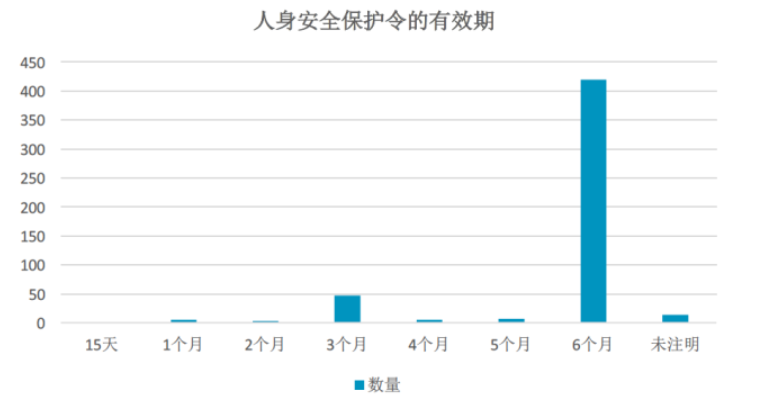
In 692 cases, the courts issued a total of 500 personal safety protection orders, with validity periods ranging from 15 days to 6 months. The shortest protection period was 15 days, occurring in only 1 case. The longest protection period was 6 months, accounting for 419 cases, or 84%. There were 47 cases with a protection period of 3 months, accounting for 9%. In addition, the number of cases with protection periods of 1 month, 2 months, 4 months, and 5 months was less than 10 in each category.
V. Applicants’ Seeking of External Assistance
(1) More than half of the applicants did not seek external assistance
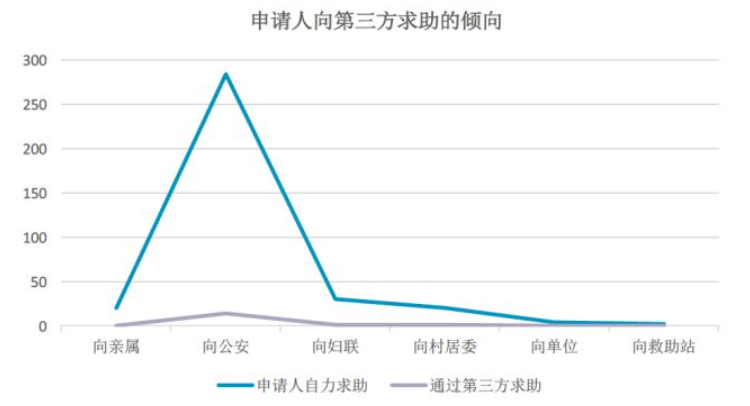
Of the 692 cases, applicants in 320 cases sought external assistance on their own, accounting for 46%; applicants in 14 cases sought external assistance through a third party, accounting for 2%. In addition, applicants in as many as 358 cases did not seek external assistance, accounting for 52%.
(2) Applicants Tend to Seek Assistance from Public Security Authorities
Among the 692 cases, applicants in 320 cases sought external assistance on their own, while applicants in 14 cases sought external assistance through a third party.
Among the cases where applicants sought external assistance on their own, the largest number involved seeking help from public security authorities, totaling 284 cases, accounting for 79%; The Women’s Federation was the second most common recipient of such requests, with 30 cases, accounting for 8%; requests to relatives and village/neighborhood committees each numbered 20, accounting for 6% each.
In cases where applicants sought help through a third party, the police remained the most frequent recipient: in all 14 of these cases, the applicants had sought assistance from the police via a third party.
(3) Applicants are more inclined to seek judicial assistance
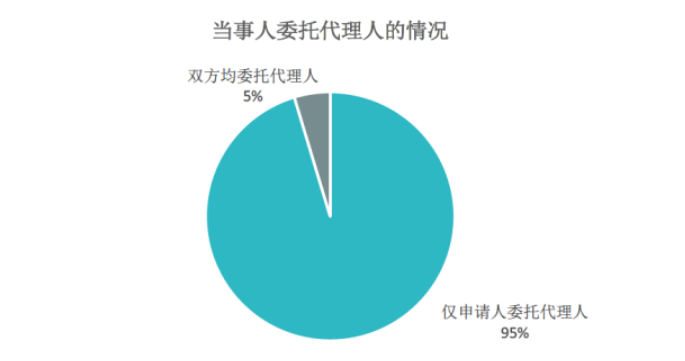
In 692 cases, only 129 cases of the applicant or respondent commissioned an agent, accounting for only 19 % of the total cases. Among them, there were 123 cases in which only the applicant entrusted the agent, accounting for 95 % ; there were 6 cases in which both parties entrusted agents, accounting for 5 %.
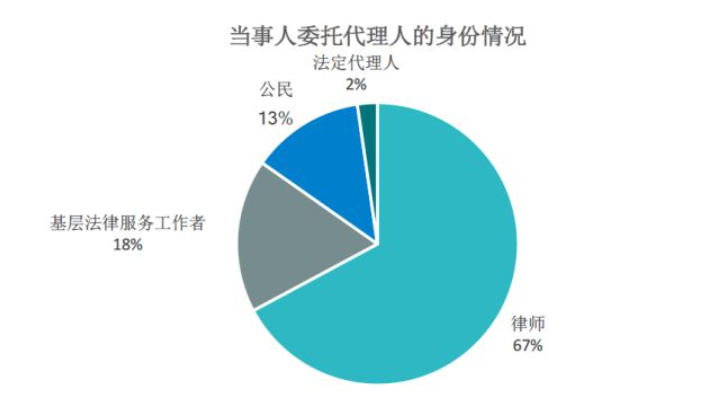
In 129 cases where the applicant / respondent entrusted an agent, 67 % of the parties entrusted a lawyer as an agent. In addition, the proportion of cases in which the applicant / respondent entrusts grassroots legal service workers is 18 %, while the proportion of cases in which the applicant / respondent entrusts ordinary citizens as agents is 13 %. Of the 129 cases, only four applicants sought legal aid.
VI. The Applicant’s Presentation of Evidence and the Correlation Between Evidence and the Court’s Issuance of Protection Orders
(1) The majority of applicants did not present evidence to the court.
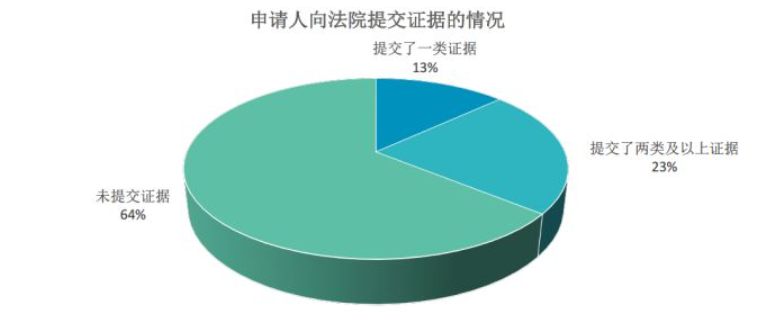
Out of 692 cases, a total of 248 applicants submitted evidence to the court to prove that the respondent had committed domestic violence. Among these, there were 91 cases (13%) where the applicant submitted only one type of evidence; 157 cases (23%) where the applicant submitted two or more types of evidence; and 444 cases (64%) where the applicant did not submit any evidence to the court.
(2) Among the types of evidence submitted by applicants, evidence of seeking assistance from the police accounted for the highest proportion.
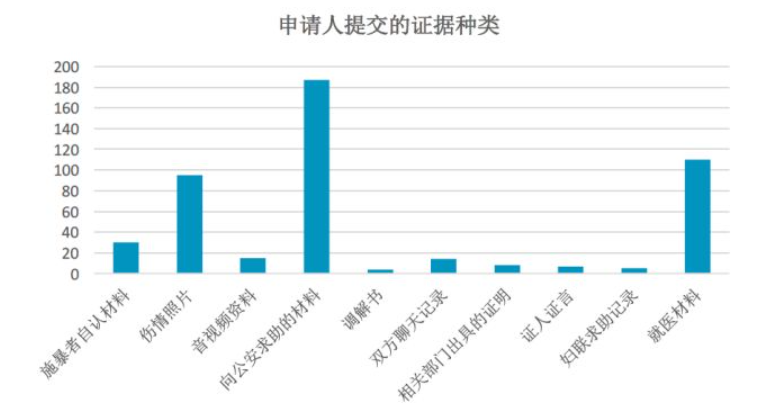
Of the 248 cases where applicants had submitted evidence to the court, 187 cases involved applicants submitting materials showing they had sought help from the police, accounting for 75%. In 110 cases, applicants submitted hospital medical records proving they had sought treatment due to domestic violence, accounting for 44%. Additionally, in 95 cases, applicants submitted injury photos to prove they had suffered domestic violence, accounting for 38%.
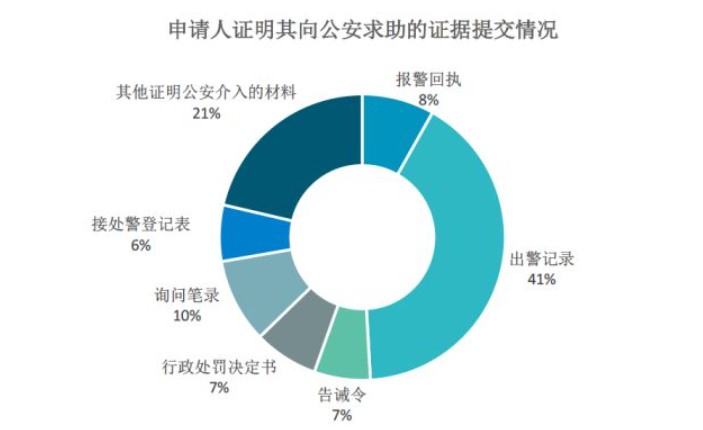
Among the 187 cases where applicants submitted materials to the court to prove they had sought help from the police, the submission of police dispatch records as evidence was the highest, at 41%. In contrast, the proportion of cases where applicants submitted evidence such as police acknowledgment receipts, incident response registration forms, interview transcripts, administrative penalty decisions, and warning orders to the court was all below 10%.
(3) Among the evidence submitted by applicants to prove their injuries, hospital medical records accounted for the highest proportion.
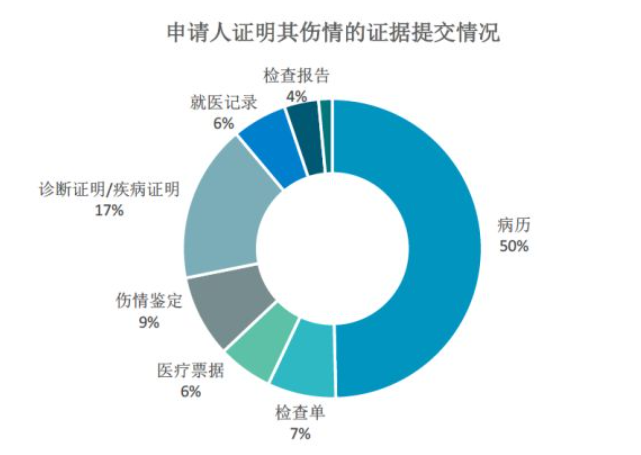
Among the 110 cases in which applicants submitted materials to the court to prove their violent injuries, the highest proportion of applicants submitted medical records to the court was 50 %. The proportion of cases in which the applicant submitted a diagnostic certificate / disease certificate to the court was the second, at 17 %. In addition, the proportion of cases in which the applicant submits evidence such as checklists, medical bills, injury identification, medical records, and inspection reports to the court is less than 10 %.
(4) Perpetrator's Self-Admission and Women's Federation Assistance Records—Both 100% Admitted by the Court, Leading to the Issuance of Protection Orders
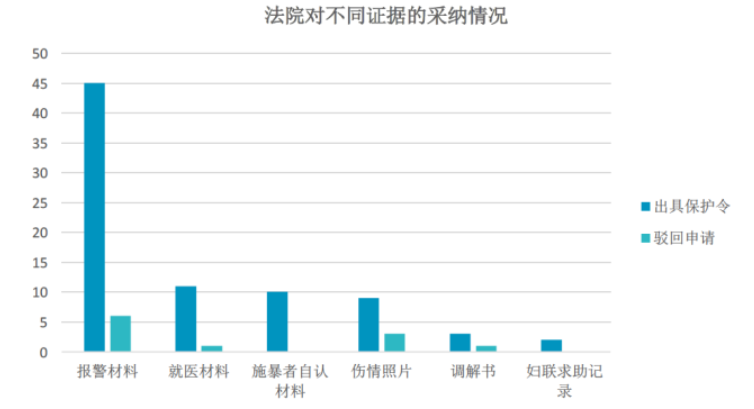
Among the 91 cases where applicants submitted only one type of evidence, the courts issued protection orders in all cases where the applicant submitted either the perpetrator’s confession or records of assistance sought from the Women’s Federation, with a 100% acceptance rate for these two types of evidence. Furthermore, the proportion of cases in which the court issued protection orders when the applicant submitted only medical records was as high as 92%. Additionally, the proportion of cases in which the court issued protection orders when the applicant submitted only police reports was 88%; and the proportion of cases in which the court issued protection orders when the applicant submitted only injury photos or mediation agreements was 75%.
(5) The more substantial the evidence presented by the applicant, the higher the likelihood that the court will issue a protection order.
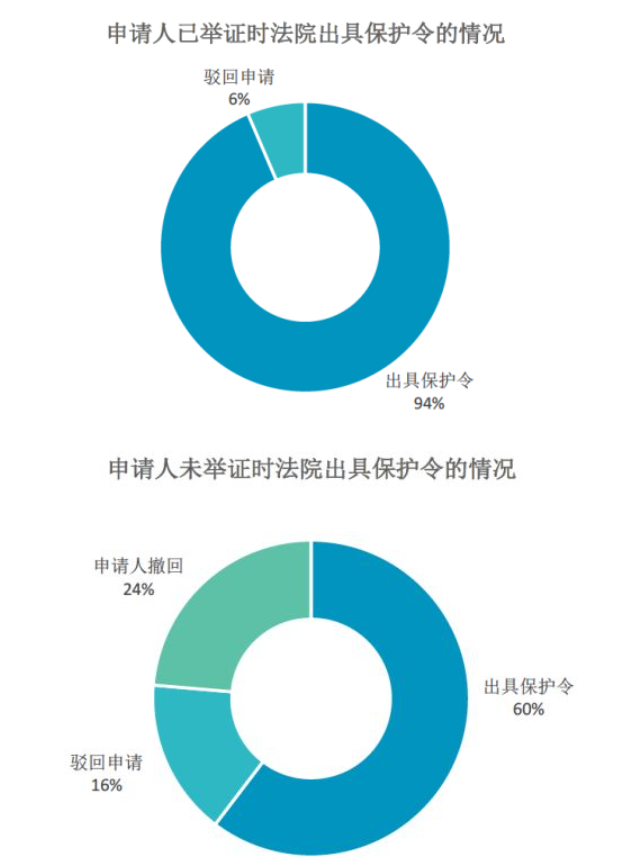
A comparison of the court’s issuance of personal safety protection orders with and without evidence presented by the applicant shows that the likelihood of the court issuing such an order is significantly higher when the applicant has presented evidence than when the applicant has not. It is worth noting that in cases where the applicant has not presented evidence, the rate at which applicants withdraw their applications reaches 24%.
VII. Content of Personal Safety Protection Orders
(1) In 50% of cases, the court’s ruling was substantially consistent with the protection order requested by the applicant.
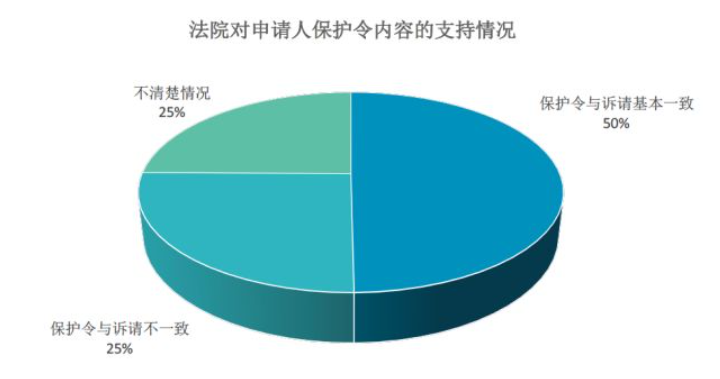
Among the 500 cases in which the court issued a protection order, 249 cases—accounting for 50%—involved orders that were substantially consistent with the applicant’s request. In 127 cases, the protection orders issued by the courts differed from the applicants’ requests, accounting for 25%. Additionally, in the remaining 124 cases, it was not possible to determine whether the protection orders issued by the courts were consistent with the applicants’ requests; these cases accounted for 25%.
(2)Prohibitory orders are the most widely applied, while orders to vacate and orders to stay away are used relatively less frequently.
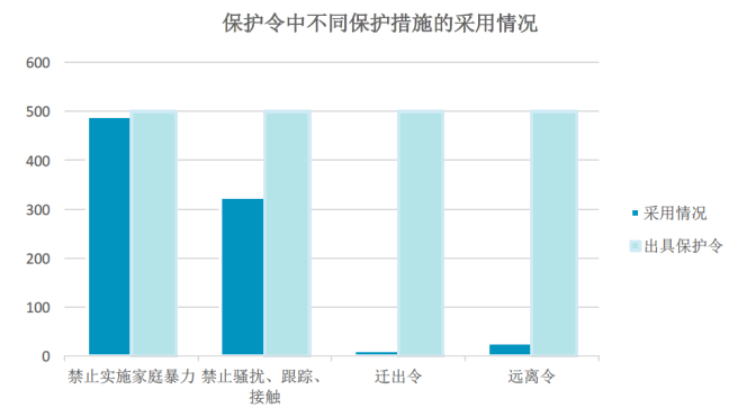
Note: Data on prohibitions against domestic violence includes physical and psychological abuse committed through means such as beating, binding, mutilation, restriction of personal freedom, as well as frequent verbal abuse and intimidation.
Among the 500 cases in which the court issued protection orders, the measure most frequently adopted was the prohibition against domestic violence, totaling 490 cases, or 98%. The second most common protective measure adopted by the courts was the prohibition of harassment, stalking, and contact, with 324 cases, accounting for 65% of all protection orders. In addition, the number of cases in which the courts adopted the two types of protective measures—eviction orders and restraining orders—was relatively low, with fewer than 30 cases each.
(3) Eviction orders and restraining orders are used the least, yet the rejection rate is high.
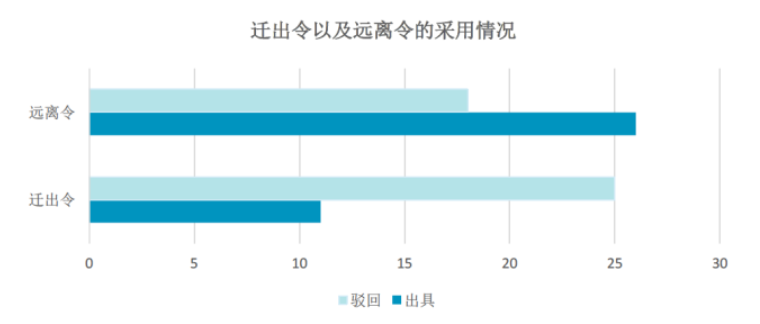
In 500 cases where the court issued protection orders, only 26 cases included a stay-away order as a protective measure, while applications for stay-away orders were rejected in 18 cases, resulting in a rejection rate of 41%. Protective measures included an order to vacate in only 11 cases, and applications for orders to vacate were rejected in 25 cases, resulting in a rejection rate of 69%.
(4) Cases involving three or more protective measures are rare; the highest number of cases involved the simultaneous application of measures prohibiting domestic violence and measures prohibiting harassment, stalking, and contact.
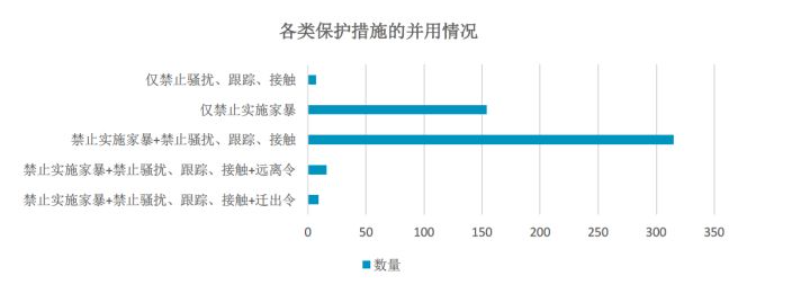
Among the 500 cases in which the court issued protection orders, the protective measures primarily consisted of prohibitions against domestic violence and prohibitions against harassment, stalking, and contact.
There were zero cases in which four typical protective measures—prohibition of domestic violence, prohibition of harassment, stalking, and contact, eviction orders, and restraining orders—were combined.
The number of cases in which three types of protective measures—prohibition of domestic violence, prohibition of harassment, stalking, and contact, and eviction orders/restraining orders—were combined was 9 and 16, respectively. The largest number of cases involved the simultaneous issuance of both the prohibition of domestic violence and the prohibition of harassment, stalking, and contact, totaling 315 cases, accounting for 63% of all protection orders.
The number of cases in which the court issued only the prohibition of domestic violence was 154, accounting for 31%.
The number of cases in which the court issued only the prohibition of harassment, stalking, and contact was 7, accounting for 1.4%.
Part III: Summary and Reflections on the Report
I. The Proportion of Personal Safety Protection Rulings Made Public through the Internet is Low.
According to statistics from the Supreme People’s Court, more than 1,000 personal safety protection orders had been issued nationwide within three months of the implementation of China’s Anti-Domestic Violence Law. However, as of February 2018, the author was able to locate fewer than 1,000 such orders published online by courts at all levels across the country. This indicates that the proportion of personal safety protection orders made publicly available via the internet remains low.
II. Domestic Violence Cases Primarily Occur Between Heterosexual Couples and Often Involve Divorce Disputes
Analysis of the available data reveals that the parties involved in personal safety protection rulings in China are primarily heterosexual spouses, and a significant number of cases involve divorce disputes.
III. Perpetrators with a History of Domestic Violence Are More Likely to Continue Abusive Behavior
In the statistical data, 70% of applicants alleged that the respondent had a history of domestic violence. Furthermore, in cases where the parties were previously involved in divorce proceedings but remained married at the time the applicant filed for a personal safety protection order, the abuser did not cease or reduce violence against the victim simply because the court denied the divorce, one party withdrew the divorce petition, or the parties reconciled through mediation.
IV. Physical violence is the predominant form of domestic violence, and it most frequently occurs alongside psychological violence
70% of applicants reported suffering physical violence, and 63% of these applicants also reported suffering psychological violence. Physical and psychological violence most frequently occur concurrently. Furthermore, the number of cases in which applicants reported suffering economic control or sexual violence was low, with fewer than 10 cases in each category.
V. The proportion of applicants presenting evidence to the court is low, and the types of evidence are limited
Cases in which applicants provided evidence to the court regarding the perpetrator’s domestic violence accounted for only 36%. Among these, applicants tended to submit materials related to seeking assistance from public security authorities, medical records, and photographs of injuries; the submission rate for other types of evidence was significantly lower than for the aforementioned three categories.
The applicants’ submission of evidence is closely linked to their patterns of seeking external assistance; in nearly 80% of cases, applicants tend to seek help from the police.
The courts’ acceptance of evidence also exhibits distinct characteristics: the acceptance rate for materials containing the abuser’s own admissions and materials from the Women’s Federation is 100%, while the acceptance rate for medical records and police reports is also above 50%.
VI. Judicial Practice Regarding Applications for Personal Safety Protection Orders
First, the period for the court to issue a personal safety protection decision is basically within the statutory period, that is, within 72 hours. However, in 23 % of the cases, the court issued a personal safety protection ruling after exceeding the legal period, and even issued a ruling after more than 15 days.
Second, the overall rate at which courts issue personal safety protection orders is 72%. As the types of evidence submitted by applicants increase, the rate of protection order issuance rises significantly: in cases where evidence has been submitted to the court, the issuance rate is 94%, whereas in cases where applicants have not submitted evidence, the issuance rate is 60%.
Third, the protective measures in the orders issued by the courts were relatively limited. In 50% of cases, the content of the protection orders issued by the courts was essentially consistent with the applicant’s requests. Among the protective measures adopted, the highest proportion—98%—involved prohibiting the perpetrator from committing domestic violence. The second-highest proportion, at 65%, involved prohibiting harassment, stalking, and contact. The courts’ use of stay-away orders and eviction orders was the lowest, and the rejection rate for these orders was high.
Fourth, the duration of personal safety protection orders is generally six months, though there are exceptions. The shortest protection period was 15 days, while orders with a three-month protection period ranked second in number.
VII. Other Noteworthy Content in the Report
(1) Application of the Law Regarding Protection Orders Sought by Former Spouses
According to the statistical data, there were a total of four cases of domestic violence involving former spouses. In two of these cases, the court issued personal safety protection orders [Case Nos.: (2016) Chongqing Jiangjin District People's Court Civil Protection Order No. 1; (2016) Anhui Huangshan City Tunxi District People's Court Civil Protection Order No. 1]. A notable feature of these two cases where protection orders were issued was that the parties were still cohabiting; consequently, the court ultimately granted the applicant’s request. This reflects the provision in Article 37 of China’s Anti-Domestic Violence Law, which protects persons living together who are not family members.
In the two cases where the court denied protection for a former spouse, the grounds for denial were that the parties were no longer family members and did not cohabit. [Case Nos.: (2016) Hunan Chenzhou City Beihu District People's Court Civil Protection Order No. 2; (2016) Sichuan Chengdu City Wuhou District People's Court Civil Protection Order No. 1]
(2) Definition of Family Members
Among the cases analyzed, there was one where the applicant was a father-in-law and the respondent was a son-in-law [Case No.:(2016) Tianjin Hedong District People's Court Civil Protection Order No. 5]. However, the court dismissed the applicant’s claim on the grounds that the applicant and the respondent were not direct subjects of domestic violence as defined by China’s Anti-Domestic Violence Law.
Furthermore, in another case where the applicant was a daughter-in-law and the respondent was her father-in-law [Case No.: (2016) Jiangsu Nanjing City Liuhe District People's Court Civil Protection Order No. 1], the court ultimately issued a protection order because the father-in-law had caused multiple superficial injuries to the daughter-in-law’s body.
China’s Anti-Domestic Violence Law does not define the scope of family members, nor do civil laws such as the “General Provisions of the Civil Law,” the “Marriage Law,” and the “Inheritance Law” delineate the scope of family members. Laws such as the “Marriage Law” and the “Inheritance Law” establish civil rights and obligations among spouses, parents and children, siblings, and grandparents and grandchildren. If the scope of family members in domestic violence cases is determined solely based on these provisions, it appears overly narrow. Due to the implementation of the one-child policy, only children are now reaching marriageable and child-rearing ages, and it is common for young couples to live with both sets of parents. If in-law relationships—such as between a father-in-law and son-in-law or a mother-in-law and daughter-in-law—are excluded from the definition of family members, violent incidents occurring among such groups will not be properly addressed and may even further exacerbate family conflicts.
In the aforementioned cases, some courts did not limit the definition of “family members” to the criterion of cohabitation; however, a few courts dismissed the applicants’ claims on the grounds that the applicants and respondents lacked close familial ties—such as those between spouses—or did not live together. Therefore, the definition of “family members” still requires further clarification.
(3) Implementation of Temporary Shelter Measures
Article 18 of China’s Anti-Domestic Violence Law stipulates that county-level or district-level municipal people’s governments may establish temporary shelters independently or in collaboration with rescue and management agencies to provide temporary living assistance to victims of domestic violence. However, according to the statistical data, the number of cases in which domestic violence victims received assistance from shelters, rescue and management agencies, or welfare institutions is negligible. In only three cases were applicants sent to rescue stations or safe shelters for accommodation. [Case Nos.: (2017) Zhejiang Wenzhou City Ouhai District People's Court Civil Protection Order No. 11;(2016) Jiangsu Nantong City Chongchuan District People's Court Civil Protection Order No. 2; (2016) Hubei Shiyan City Zhangwan District People's Court Civil Protection Order No. 2]