


In a remarried family, where one spouse has established a foster and maintenance relationship with the minor child brought by the other spouse, will the foster relationship with the stepchild be automatically terminated upon divorce of the couple? In other words, can a stepchild whom one has raised still compete with biological children for the estate after divorce?
There are two prevailing views in legal circles:
The first view holds that the stepchild may indeed inherit. Under the relevant provisions of the Succession Law and the Civil Code, the statutory first‑order heirs include spouses, children and parents. The term children covers legitimate children, illegitimate children, adopted children, and stepchildren with a maintenance and foster relationship. The law imposes no restriction on the inheritance right of such stepchildren. Therefore, even if the biological parent divorces the stepparent, it does not affect the stepchild’s status as a first‑order heir entitled to inherit the stepparent’s estate.
The second view maintains that the stepchild shall not inherit. The relationship between stepparent and stepchild arises from affinity by marriage. Once the marital tie is dissolved, the foundation of the stepparent‑stepchild relationship collapses accordingly. Hence, if the biological parent and stepparent divorce, the stepchild who once had a foster relationship shall no longer enjoy the right of inheritance.
How do courts handle such cases in judicial practice? Let us look at the following two real cases.
Case 1: Stepchild Inherits Equally with Biological Children
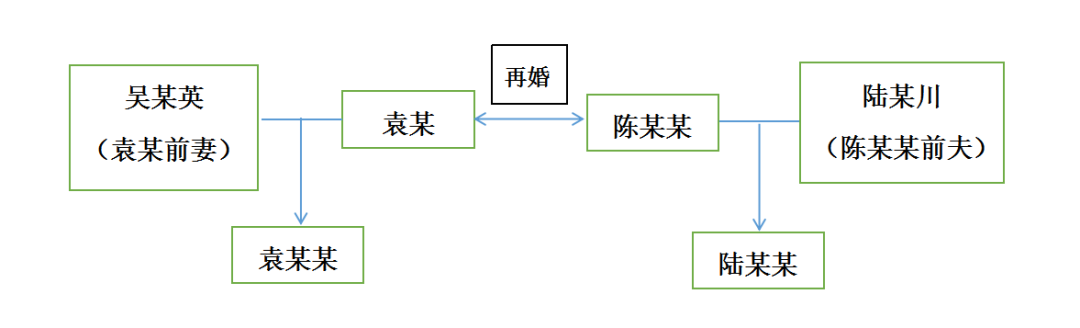
The decedent Yuan passed away on May 16, 2016; his parents predeceased him.
Yuan divorced his former wife Wu in a negotiated divorce on December 12, 1994, and they had a biological daughter Yuan Moumou.
Chen had a daughter Lu Moumou with her former husband Lu Chuanshan. Chen and Lu Chuanshan divorced by agreement on August 23, 2000, with Lu Moumou placed under Chen’s custody.
On November 1, 2000, Yuan married Chen, and they had no children together during their marriage. Yuan and Chen divorced by mutual agreement on June 6, 2014.
After Yuan’s death, Yuan Moumou filed a lawsuit claiming sole inheritance of all Yuan’s estate. She contended that when Yuan married Chen, Lu Moumou was already 16 years old. Following Yuan and Chen’s divorce 14 years later, the stepfather‑stepdaughter relationship between Yuan and Lu Moumou dissolved accordingly. Thereafter Lu Moumou had no contact with Yuan, never provided care, visits or support to him, and therefore should have no right to inherit his estate.
Lu Moumou argued in her defense that she was still a minor when Chen married Yuan and had lived together with Yuan, maintaining a good relationship. Part of Yuan’s medical expenses were paid from Chen’s bank account, and Chen’s property was commingled with Lu Moumou’s assets. Accordingly, Lu Moumou had fulfilled corresponding maintenance obligations toward Yuan and was entitled to inherit his estate.
(一) Core Dispute Issue
When Lu Moumou’s biological mother married Yuan, Lu Moumou was still a minor; by the time her biological mother divorced Yuan, Lu Moumou had reached adulthood. The key issue is: is Lu Moumou entitled to inherit Yuan’s estate?
(二) Court Judgment
The court of first instance held that when Chen Moumou married Yuan, Lu Moumou was still a student and underage. Evidence including the residence certificate issued by the neighborhood committee, the stepfather certificate processed by Yuan, and photos provided by Lu Moumou proved that Yuan had taken care of Lu Moumou’s daily life and education.
Accordingly, a factual foster and maintenance relationship of stepfather and stepdaughter was established between Yuan and Lu Moumou. Such a relationship is not automatically terminated upon the dissolution of the marriage between Yuan and Chen Moumou. Therefore, Lu Moumou shall be entitled to inherit and participate in the distribution of Yuan’s estate as one of his heirs.
The first-instance court ruled that Yuan Moumou and Lu Moumou shall inherit Yuan’s estate equally by statutory inheritance. Dissatisfied with the first-instance judgment, Yuan Moumou filed an appeal.
The court of second instance held that pursuant to Article 10 of the Succession Law of the People’s Republic of China, the category of children entitled to inheritance rights includes legitimate children, illegitimate children, adopted children, and stepchildren with a foster and maintenance relationship.
In this case, the appellee Lu Moumou was still a minor when the decedent Yuan married Chen Moumou. Based on the evidence on file, the first-instance court’s finding that a factual foster relationship existed between the decedent Yuan and the appellee Lu Moumou, and that the appellee therefore had the right to inherit the decedent’s estate, is well-grounded in both fact and law. The appellate court affirms such finding, upholds the original judgment and dismisses the appeal.
Case 2: Stepchild Not Entitled to the Right of Inheritance
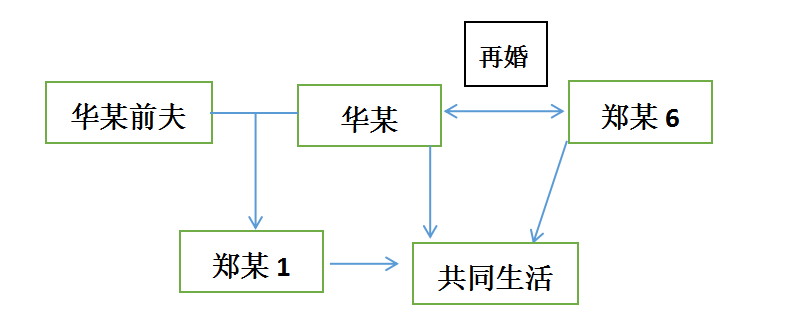
Zheng Mouyi was born on June 30, 2002. His mother Hua Mou remarried Zheng Moliu on December 22, 2003, and Zheng Mouyi lived together with Zheng Moliu and Hua Mou.
In 2016, Hua Mou filed a lawsuit against Zheng Moliu for divorce. On August 26, 2016, the Pinggu District People’s Court rendered a judgment granting the divorce between Hua Mou and Zheng Moliu.
After the divorce, Hua Mou and Zheng Mouyi immediately moved out of the involved residence. Zheng Moliu ceased paying maintenance expenses for Zheng Mouyi, and Zheng Mouyi also never visited Zheng Moliu thereafter.
Zheng Moliu passed away on September 4, 2018. His parents predeceased him, and he had no spouse or other children at the time of his death.
Zheng Mouyi instituted proceedings in the court of first instance, claiming the right to inherit the involved house left by Zheng Moliu.
The court of first instance ascertained that Zheng Moliu had four siblings: eldest sister Zheng Muer, second sister Zheng Mosan, eldest brother Zheng Mosi, and second brother Zheng Mowu. All funeral arrangements for Zheng Moliu were handled by his brothers and nephew, while Zheng Mouyi did not attend his funeral or condolence activities.
Core Dispute Issue
Upon the divorce between Hua Mou and Zheng Moliu, whether the stepparent-stepchild relationship between Zheng Moliu and Zheng Mouyi was terminated simultaneously; and whether Zheng Mouyi is entitled to the inheritance right of Zheng Moliu’s estate.
Court Judgment
The court of first instance held that although the stepparent-stepchild relationship is premised on the marital relationship between the stepparent and the biological parent, once a factual foster and education relationship is established, it forms an independent civil legal relationship. Such relationship may be terminated under certain conditions, but it shall not be deemed that the rights and obligations between stepparent and stepchild automatically terminate merely upon the dissolution of the underlying marriage.
Where a stepchild raised and educated by a stepparent has reached adulthood when the biological parent divorces the stepparent, the stepparent-stepchild relationship may be terminated by litigation. For minor stepchildren, if the stepparent does not consent to continue fostering them upon divorce with the biological parent, the stepparent-stepchild relationship shall remain intact, and the stepparent shall still bear the obligation of continued upbringing.
In accordance with the Several Specific Opinions of the Supreme People’s Court on the Trial of Divorce Cases Concerning Child Custody Issues, when a biological father divorces a stepmother or a biological mother divorces a stepfather, if the stepfather or stepmother refuses to continue fostering the stepchild whom he or she has previously raised and educated, the stepchild shall still be raised by his or her biological parent. It can be inferred from this provision that where a stepparent refuses to continue fostering the stepchild upon divorce, the stepchild shall be taken care of by the biological parent, and the stepparent-stepchild relationship shall cease accordingly.
In this case, Zheng Mouyi was still a minor when Hua Mou divorced Zheng Moliu. Thereafter, Zheng Moliu had no contact with Zheng Mouyi and ceased paying child maintenance. After moving out of the disputed house, Zheng Mouyi never paid any visit to Zheng Moliu, nor did he participate in Zheng Moliu’s funeral and condolence arrangements.
The above facts suffice to confirm that Zheng Moliu refused to continue fostering Zheng Mouyi, and the stepparent-stepchild relationship between them has been terminated. Accordingly, Zheng Mouyi shall not participate in the distribution of Zheng Moliu’s estate as a stepchild with a foster relationship.
Zheng Mouyi filed an appeal against the first-instance judgment. The court of second instance affirmed the facts found by the first-instance court.
The appellate court held that although there existed factual foster conduct between Zheng Mouyi and Zheng Moliu, the fostering did not last until Zheng Mouyi reached adulthood. It is evident from the divorce proceedings between Hua Mou and Zheng Moliu that Zheng Moliu was unwilling to continue fostering Zheng Mouyi. After the divorce, the two had no further contact and severed emotional ties.
Laws on marriage, family and inheritance aim to uphold public order and good morals and the principle of reciprocity of rights and obligations. Zheng Moliu passed away while Zheng Mouyi was still a minor, making it impossible for Zheng Mouyi to perform the obligation of supporting Zheng Moliu in return. In light of Zheng Moliu’s unwillingness to maintain the foster relationship with Zheng Mouyi after the divorce, Zheng Mouyi’s claim to inherit Zheng Moliu’s estate merely on the ground of an established foster relationship lacks sufficient legal basis. The first-instance court’s ruling dismissing Zheng Mouyi’s claim for inheritance is legitimate and proper, and the appellate court hereby upholds the original judgment.
Legal Commentary
It can be seen from the above cases that people’s courts mainly base their finding that a stepchild may inherit the estate of a stepparent after the divorce between the stepchild’s biological parent and the stepparent on the following facts:
-
A foster and maintenance relationship has been established between the stepchild and the stepparent;
-
When the biological parent divorced the stepparent, the stepchild with an established foster relationship had already reached adulthood, and the adult stepchild did not terminate the parent-child relationship with the stepparent through statutory procedures;
-
When the biological parent divorced the stepparent, the stepchild with an established foster relationship was still a minor, and the stepparent continued to provide foster care and maintenance for the stepchild.
The above judicial practice is consistent with the principles of public order and good morals and reciprocity of rights and obligations. It is generally recognized that once a stepparent has fully performed the obligation of raising and fostering a stepchild, the parent-child relationship between them shall not terminate automatically. The stepchild shall perform the obligation of supporting the stepparent in accordance with the provisions on the rights and obligations of parents and children under marriage law. In such circumstances, mutual inheritance rights between the stepchild and the stepparent are also in line with public order, good morals and the principle of reciprocity of rights and obligations.
Conversely, if a stepchild who has formed a foster relationship is still a minor at the time of the divorce between the biological parent and the stepparent, the stepparent-stepchild relationship is generally deemed to terminate automatically upon the dissolution of the marital relationship.
Otherwise, the stepparent would remain bound by the maintenance obligation toward the minor stepchild. Allowing a minor stepchild to inherit the stepparent’s estate without performing any support obligation after the divorce would obviously result in an imbalance of rights and obligations and contradict good social customs. Therefore, a stepchild who is still a minor at the time of divorce shall have no right to inherit the stepparent’s estate, except where the stepparent continues to foster and maintain the stepchild.
Legal Suggestions
In summary, where a stepchild who has established a foster relationship has reached adulthood at the time of the divorce between his or her biological parent and stepparent, the stepchild still enjoys statutory inheritance rights to the stepparent’s estate. Admittedly, in the actual distribution of the estate, factors such as whether the stepchild has performed support obligations toward the stepparent will be taken into account when determining the proportion of inheritance share; nevertheless, his or her status as a statutory heir is beyond doubt.
Such an outcome is presumably inconsistent with the decedent’s true intention. How then to avoid such disputes? Legal professionals offer the following suggestion:
A stepparent is advised to make a legally valid will under the guidance of a professional lawyer, explicitly specifying that the estate shall be inherited solely by his or her biological children.
This approach can effectively prevent an adult stepchild, whom the stepparent has raised, from competing with the stepparent’s own biological children for the estate after the stepparent divorces the stepchild’s biological parent.